2026年6月27日星期六

PME Long Sweep Swivel Joint & Cementing Loop | 15000 PSI FIG 1502

Explore the ultimate B2B sourcing guide for long sweep swivel joint and heavy-duty cementing loop assembly kits. This engineering review analyzes why PME's newly completed 2" 15,000 PSI FIG 1502 batches are chosen for offshore drilling rigs and high-pressure fluid flowline setups across Southeast Asia as a trusted, 100% interchangeable replacement for standard FMC Chiksan profiles.

B2B Engineering Guide: 2" 15000 PSI Swivel Joints & Cementing Loops Deployment

SOUTHEAST ASIA OILFIELD BATCH | 100% FMC CHIKSAN INTERCHANGEABLE | HYDROSTATICALLY TESTED

When managing high-pressure fluid circuits on offshore platforms and exploration rigs, unexpected flowline failure is never an option. Standard temporary piping assemblies often experience catastrophic erosive wear due to high-velocity cement slurries and drilling mud. To resolve this, dynamic multi-axis rotation is required. Deploying a certified long sweep swivel joint ensures structural integrity under continuous 15,000 PSI working conditions.

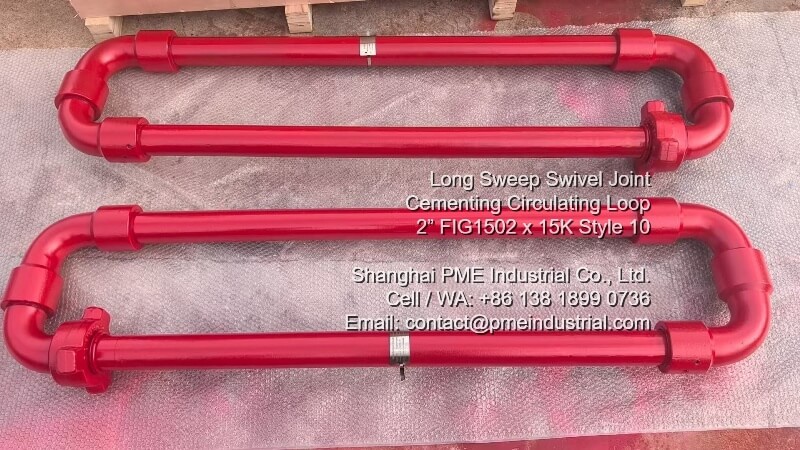
A newly finalized export shipment from Shanghai PME Industrial is now heading to drilling fields in Southeast Asia. This batch showcases precise 2-inch nominal bore components rated for 15,000 PSI NSCWP, coupled with integral cementing loop assembly lines with standard FIG 1502 Male x Female hammer unions.

PME Style 10 long sweep swivel joint 2 inch 15000 psi FIG 1502 male by female connection, heavy-duty fluid control swivel ready for shipment to Southeast Asia oilfields.

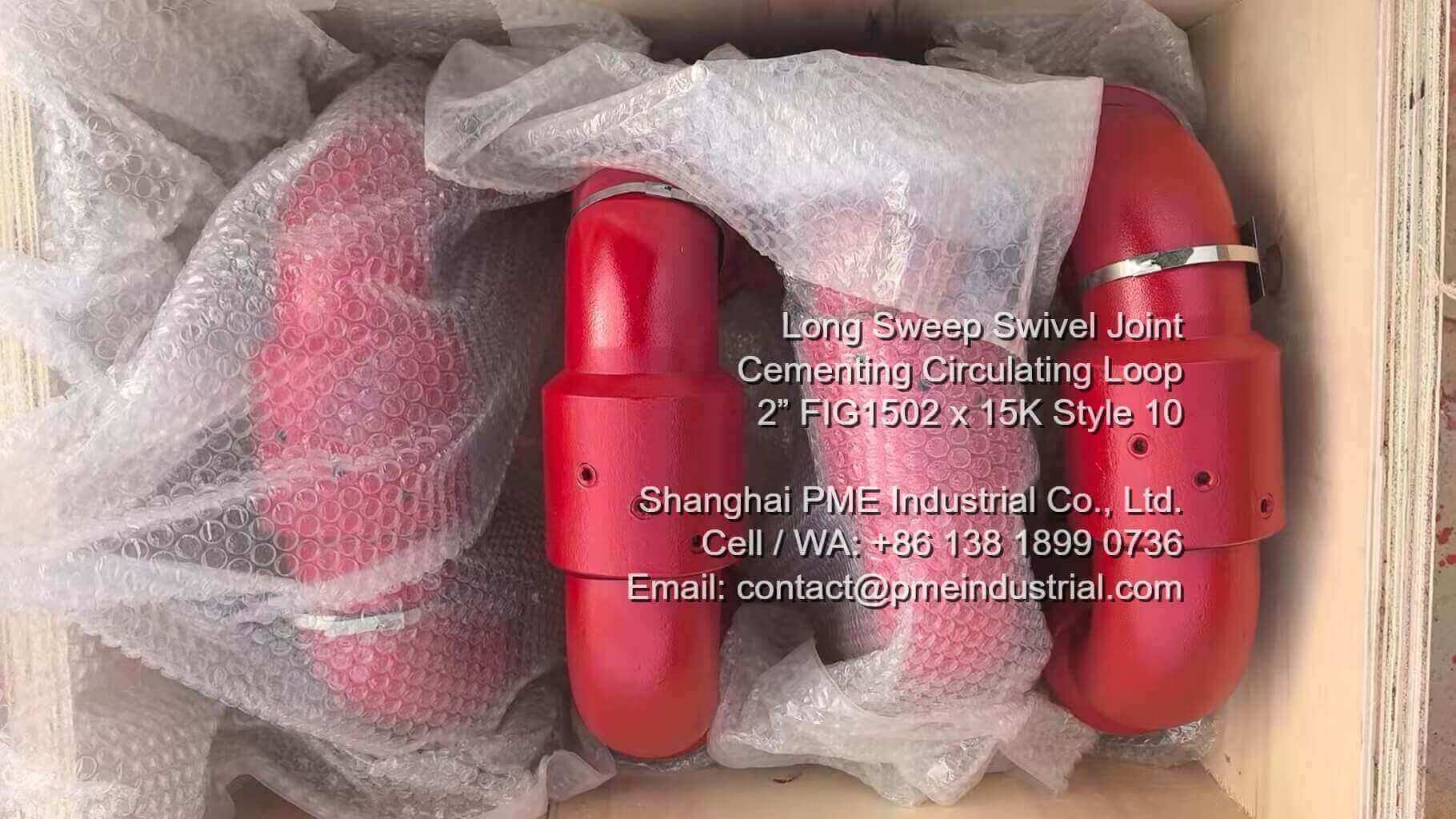
2" FIG 1502 Style 10 Swivel Joints Packing for Export

Two sets of PME 2-inch 15000 psi FIG 1502 cementing loop assemblies with Style 10 swivel joints, high-pressure temporary circulating hoses designed for oilfield service.

2026年6月22日星期一

SS Armored vs. Un-Armored Performance Metrics

In high-pressure oilfield drilling operations, the structural reliability of blowout preventer (BOP) control lines dictates site safety margins. When unexpected pressure spikes or operational dynamics create harsh surface environments, control system components must maintain structural integrity. Deploying a certified bop hose fire resistant layout ensures that localized thermal hazards do not disrupt critical control valve actuation.

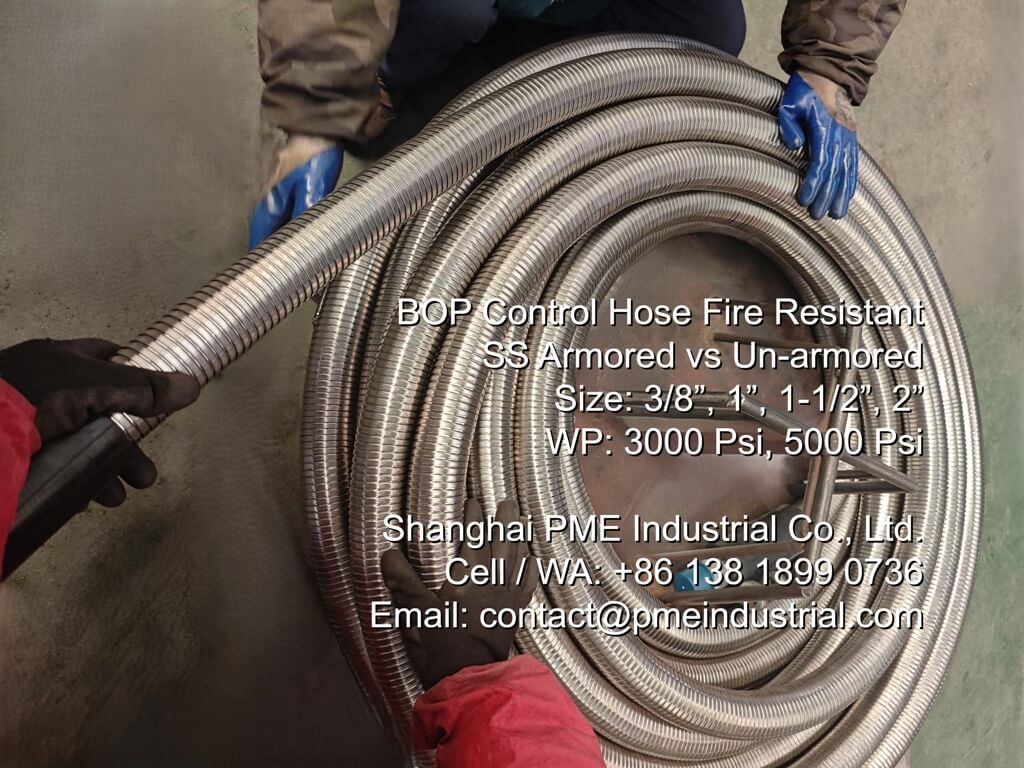
Coiled stainless steel armored fire resistant BOP hose 1 inch 5000 PSI prepped for wooden box packing

Figure 1: Stainless steel armored fire resistant BOP hose (1 inch, 5,000 PSI WP) coiled and structured for heavy-duty master lines.

Mechanical Comparison: Evaluating External Casing Strategies

Field specification teams generally segment blowout preventer hoses into two architectural configurations based on external environments: interlocked stainless steel armored sleeves and un-armored rubberized flame-retardant covers. Selecting the correct layout involves balancing mechanical impact risks against specific routing clearances.

An ss armored bop hose provides an interlocking metallic layer that shields the inner elastomer core from dropped object damage, crushing forces, and severe friction common on the rig floor. However, this mechanical protection increases weight and forces a larger minimum bend radius. Conversely, an un-armored fire flex hose utilizes proprietary compound engineering to survive thermal contact without the added metallic bulk, maximizing flexibility in confined spatial setups.

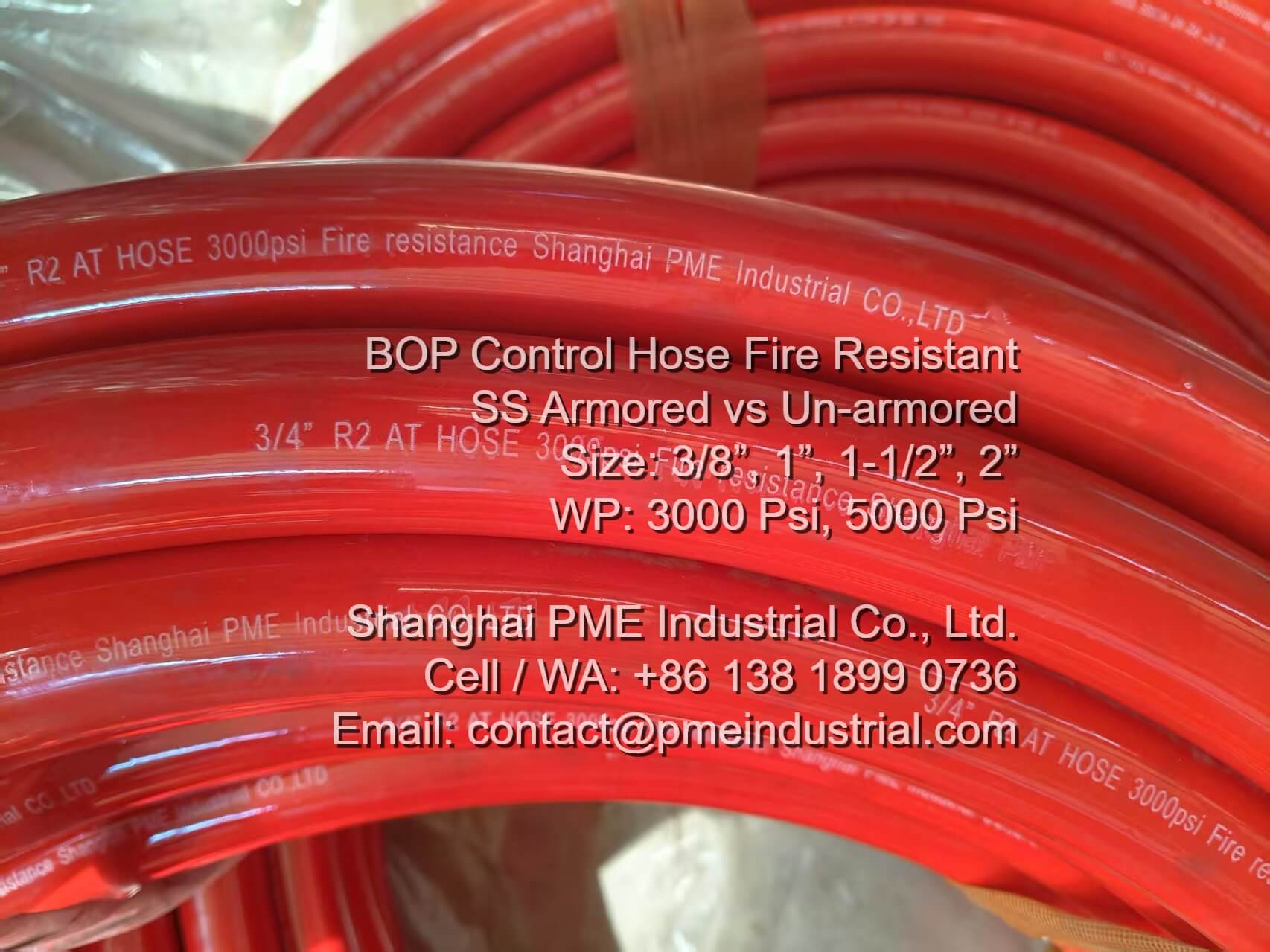
PME 3/4 inch R2 AT un-armored fire resistant BOP hose with red cover and 3000 PSI working pressure

Figure 2: Flexible 3/4 inch R2 AT un-armored fire resistant BOP hose featuring a high-visibility red rubber cover rated for 3,000 PSI.

Global Industry Benchmarks and Alternatives

For sourcing professionals review ing control manifolds, identifying independent alternative manufacturing channels is essential for managing supply chain logistics. In the international marketplace, standard 3,000 PSI and 5,000 PSI fire-resistant options serve as standalone technical alternatives to legacy series, such as the Parker FA35 line or the NRP Jones A822 Fire Flex series.

Engineering teams evaluating new project installations or routine system overhaul turnarounds can access comprehensive pressure test ratings, material tracking records, and configuration logs via the official manufacturer portal at pmeindustrial.com.

2026年6月16日星期二

API 6A 6000 Psi Swivel Coupling Style 10 & 20

In modern high-pressure oilfield manifolds and hydraulic fluid distribution circuits, flexibility and spatial optimization are critical engineering metrics. When standard solid piping networks risk fracturing due to heavy structural vibration and continuous bending moments, premium 6000 psi swivel coupling components become mandatory assets.

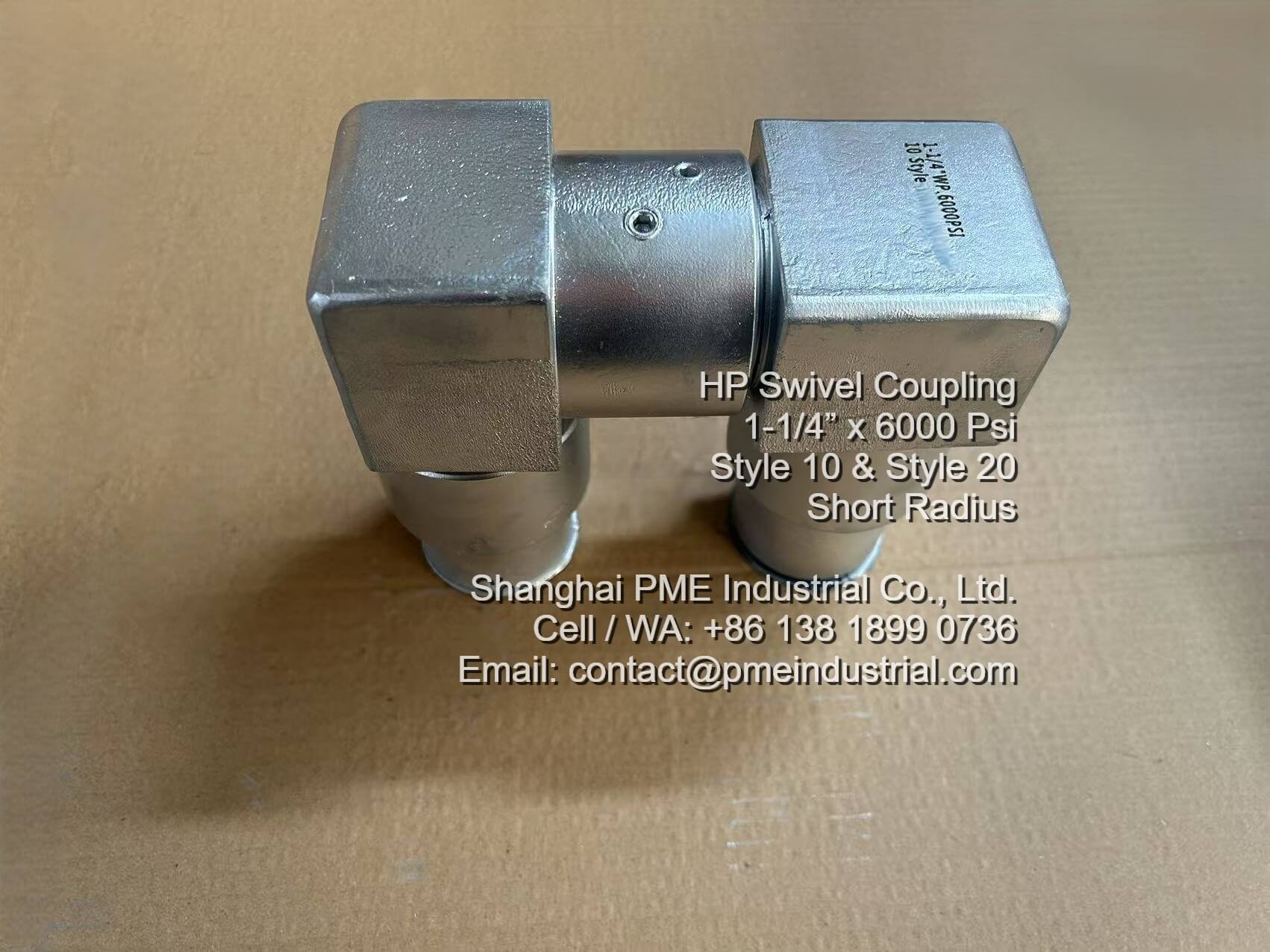
PME 1-1/4 Inch Style 10 6000 PSI Swivel Coupling Silver Coating

Figure 1: PME 1-1/4" Style 10 6000 PSI Swivel Joint featuring multiple rotation planes and protective silver plating.

Decoupling the Bend Profiles: Short Radius vs. Long Radius

Field engineers often face a critical selection dilemma: choosing between a Long Radius (LR) and a Short Radius (SR) flow elbow. While a long radius profile provides a gentler internal sweeping curvature that naturally reduces internal fluid turbulence and flow-assisted wall thinning, multiple upstream configurations demand a dedicated short radius swivel joint.

Why do dense oilfield projects intentionally specify short radius alternatives? The primary driver is severe space restriction. In truck-mounted hydraulic manifolds, offshore wellhead skids, and tight control cabinet layouts, long radius loops are physically too bulky. A short radius joint delivers an ultra-compact geometric envelope, enabling tight 90-degree flow shifts while retaining complete 360-degree rotation.

High Pressure Style 20 Short Radius Swivel Joint Interchangable with FMC

Figure 2: Compact Short Radius Style 20 Swivel Coupling optimized for space-constrained flowlines.

Interchangeability Matrices with FMC Chiksan®

For global sourcing desks, part-number lock-in is a persistent issue that inflates operational budgets during routine field turnarounds. To solve this, Shanghai PME Industrial manufactures its premium style 20 swivel coupling and style 10 swivel joint configurations to map directly onto global dimensional blueprints, mirroring legacy brands such as FMC Chiksan®.

Whether you are deploying the 1-1/4" silver-plated variant in a single-plane layout or a multi-axis system, our internal ball track alignments and critical face-to-face heights are identical to industry standards. This cross-compatibility makes PME an ideal, high-reliability choice for an instant, budget-conscious high pressure swivel joint replacement campaign without requiring any plumbing re-engineering.

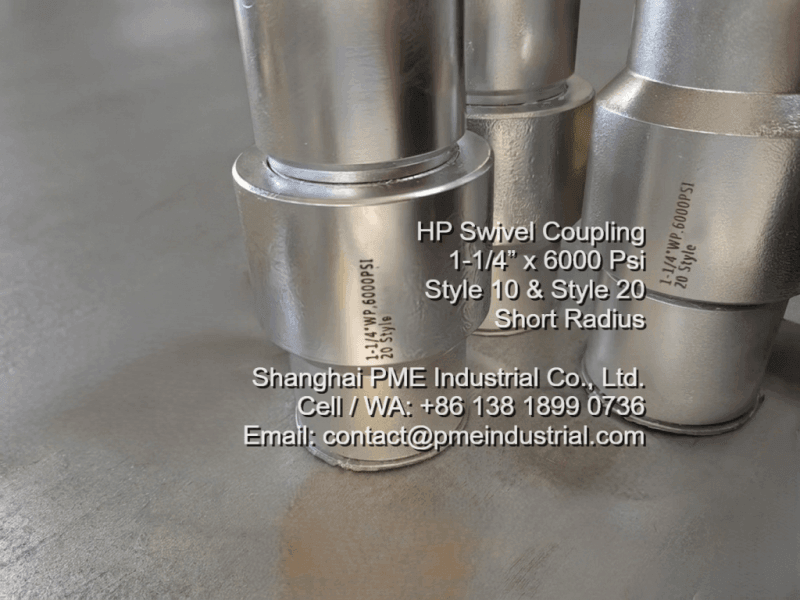
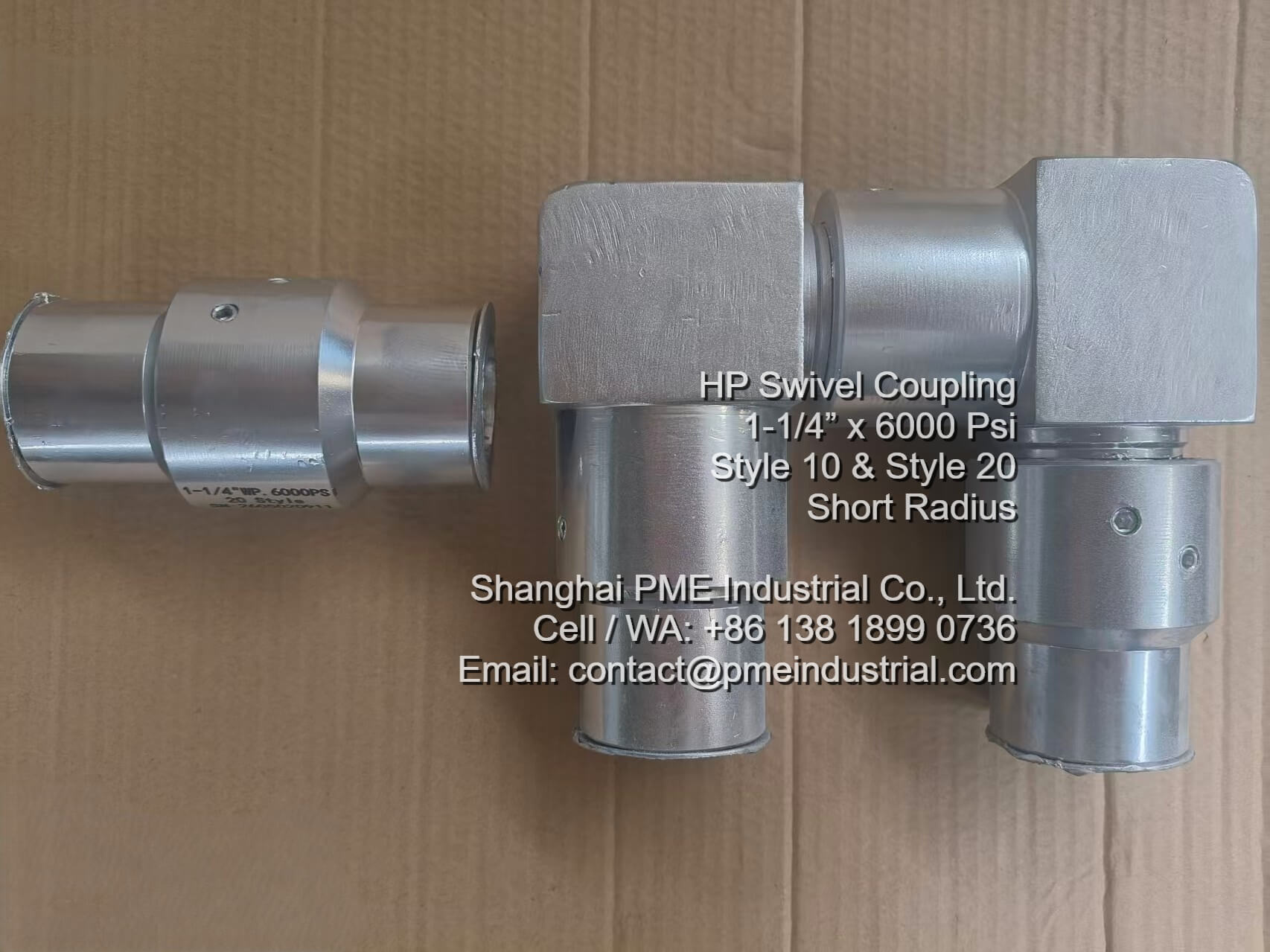
Side-by-side comparison of PME 1-1/4 inch Style 10 and Style 20 6000 PSI swivel couplings

Figure 3: Side-by-side comparison illustrating structural and axis layout differences between Style 10 and Style 20 units.

Technical Sourcing Verification Matrix:

Every distribution run of PME 1-1/4" 6000 PSI high-pressure zinc-plated couplings undergoes rigorous hydrostatic shell pressure testing and full material testing reports (MTR) validation. To compare specific dimensions, examine performance charts, or issue an immediate procurement RFQ, explore the full tech layout on the original manufacturer hub at pmeindustrial.com.

2026年6月11日星期四

PME Industrial Expands High-Pressure Flow Control Supplies in Southeast Asia Market

As energy exploration demands intensify across global fields, engineering reliability remains the defining standard for critical upstream distribution networks. In a significant operational milestone, Chinese high-pressure flowline manufacturer Shanghai PME Industrial has verified the successful completion and absolute delivery of a specialized batch of 10000 psi adjustable choke packages to a Tier-1 exploration operator located in Southeast Asia.

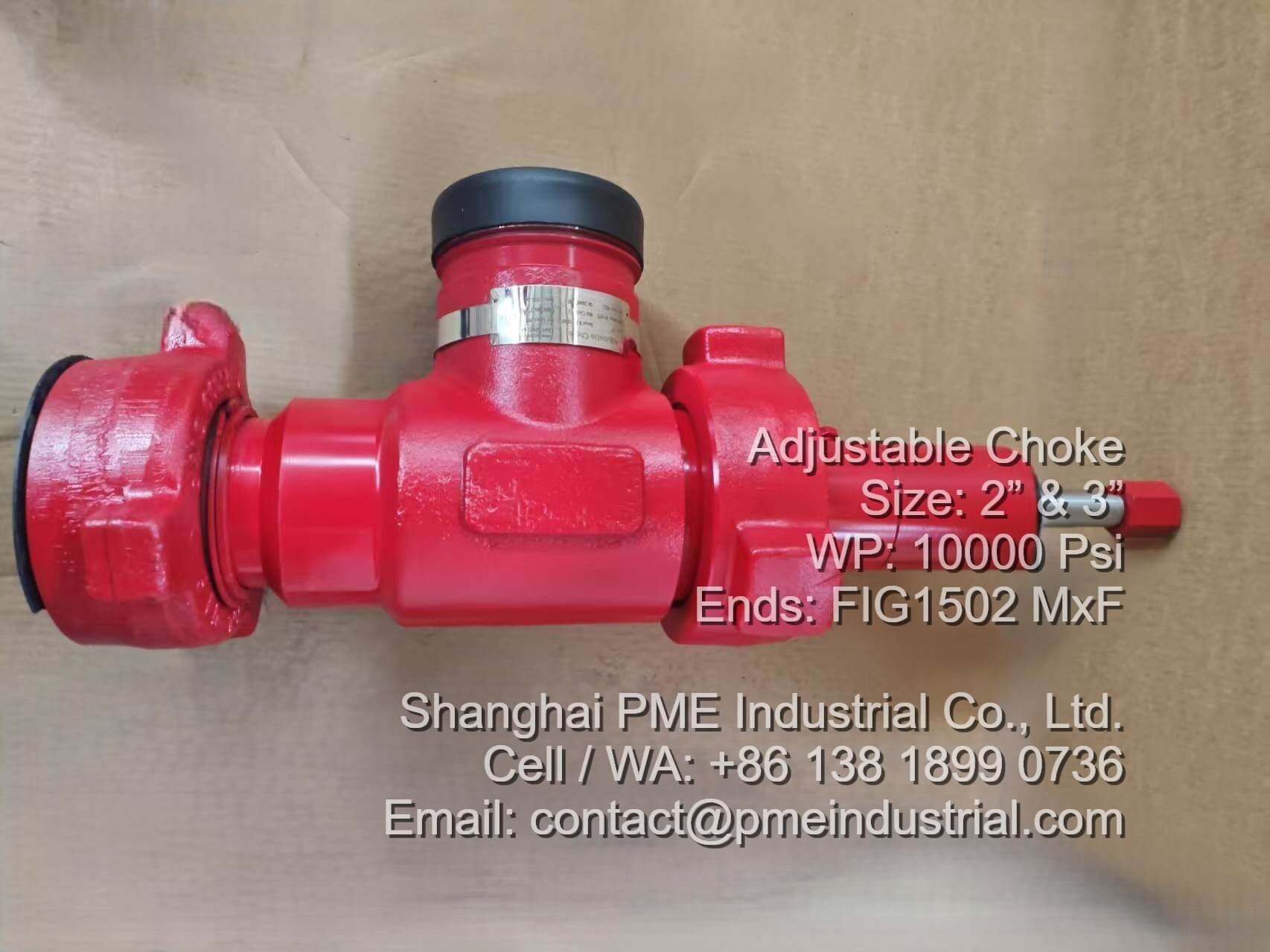
PME 2 Inch Adjustable Choke Valve 10000 PSI with FIG1502 Union Ends

Figure 1: Custom-machined 2" 10000 PSI Adjustable Choke Units ready for regional wellhead manifolds.

Meeting Harsh Offshore Field Requirements

The technical shipment focuses heavily on severe-service pressure balancing, consisting of premium 2 Inch Adjustable Choke structures and wide-bore 3 Inch Choke Valve blocks. Tailored for continuous flow restriction in intense fluid tracking lines, every valve housing is forged from heavy AISI 4130 alloy steel, meeting full NACE MR0175 and API 6A material compliance grids to resist aggressive hydrogen sulfide (H2S) deterioration.

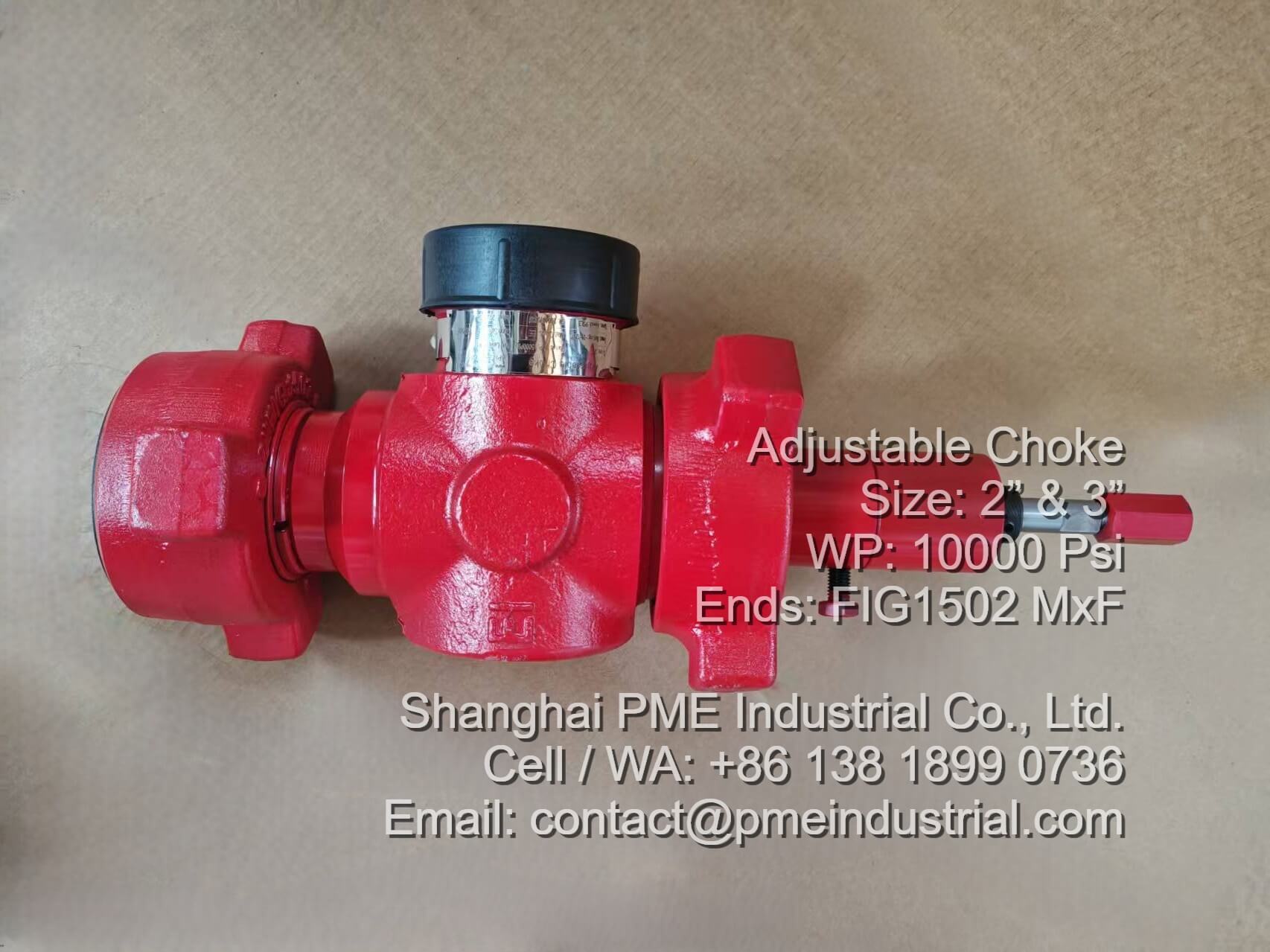
PME 3 Inch Choke Valve 10000 PSI delivered to Southeast Asia Oilfield

Figure 2: Heavy-duty 3" FIG1502 Choke Valve assemblies configured for optimal backpressure management.

By outfitting each flow block with integrated standard FIG1502 Male x Female (MxF) hammer union ends, PME enables local maintenance personnel to execute rapid, tool-free line attachments. This engineering choice avoids the common alignment shifts seen in low-tier components, safeguarding local flowlines against severe sand slurry friction and unexpected well testing pressure dropouts.

Proactive Upstream Asset Care Common Sense

According to field data released by the PME engineering desk, long-term operational consistency of an oilfield flow control valve relies on scheduled technical care. Operators are advised to continuously flush out abrasive sand cakes from bonnet sections and inject high-viscosity sealing compounds through standard grease nipples to ensure perfect stem closure boundaries.

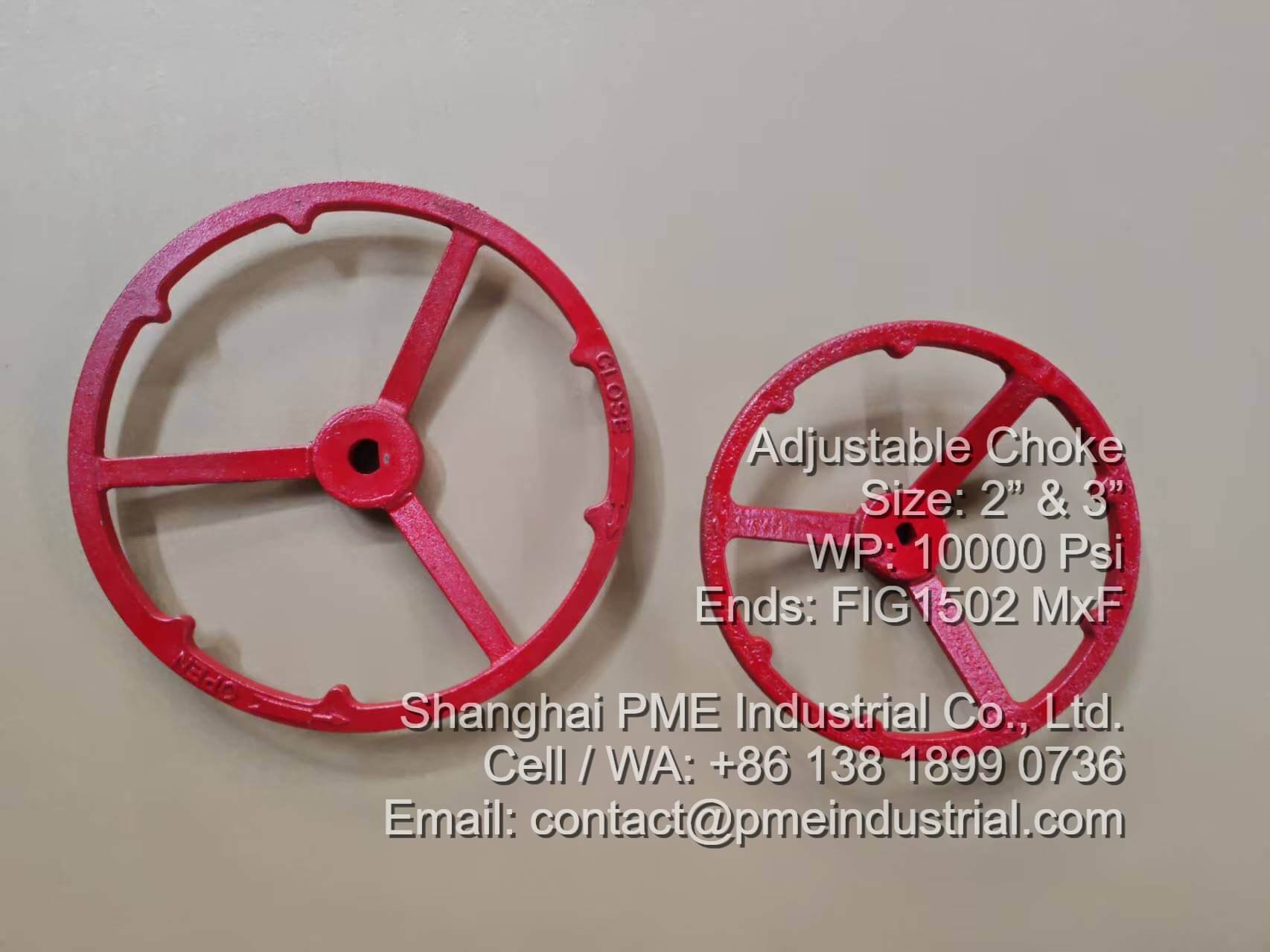
Close-up of Adjustable Choke Valve Handwheel and Stem Mechanism

Figure 3: Detailed view of the PME adjustable yoke assembly, packing gland, and heavy mechanical handwheel controls.

About Shanghai PME Industrial:

As a dedicated global adjustable choke manufacturer, PME Industrial provides verifiable material test certifications (MTR), full API 6A log data, and certified pressure validation reports with every flowline distribution run. For dimensions, technical sourcing questions, or fast direct pricing matrices, explore our comprehensive catalog directly at pmeindustrial.com.

2026年6月10日星期三

Preventing Rig Blowouts: The Critical Role of API 7K Certified Rotary & Vibrator Hoses

Unlocking Drilling Uptime: Mitigating High-Pressure Hose Failures on the Rig Floor

On modern deep-well exploration grids, high-pressure fluid circulating lines encounter severe mechanical hazards every second. Between intense mud pump pulsations, constant structural flexing, and abrasive proppant friction, flexible connections represent the most vulnerable components in the treating iron array. Choosing a non-certified layout often triggers catastrophic delamination or sudden burst blowouts. To control these liabilities, drilling superintendents are upgrading their standby lines with an integrated api 7k rotary vibrator hose system engineered for dynamic fatigue resistance.


Figure 1: Authentic standard layline markings validating API Spec 7K 6th Edition and FSL Level 2 manufacturing criteria.

Decoding Heavy Duty Vibrator Assembly Requirements

A primary safeguard against pulsation stress is the deployment of a rugged 7500 psi rotary drilling hose. Take the industry-standard 4" ID by 5" OD assembly rated for 7,500 PSI Working Pressure as an example. Built with layered high-tensile steel wire structures, it behaves as a robust mechanical buffer between the mud manifold and the standpipe. This ensures that even when dealing with peak working surges, the internal co-extruded synthetic core remains impervious to structural deformation.


Figure 2: Hydrostatic testing bay verifying structural integrity at an intense proof load of 11,250 PSI prior to shipping.

Versatile Configurations for Global Drilling Operations

Procurement demands fluctuate drastically based on mast heights and fluid volumes. For long-reach vertical movements, utilizing a high-spec kelly hose 5000 psi rated assembly spanning up to 63 feet ensures fluid consistency under potential sour gas (H2S) exposure. Alternatively, for tight bypass joints, short 3" ID setups with built-in safety clamps and lifting chains provide fast handling. For deep-bore operations, heavy-volume 5" ID "Super Driller" systems configured with rugged api 7k grade e hose standards ensure maximum containment parameters when mated with large 6" Fig. 1002 butt-weld connections.


Figure 3: Heavy-duty forged 5" Figure 1502 hammer union coupling butt-welded to the hose termination end.

Eliminating Coupling Separation Risks

The dangerous point of mechanical failure on a drill floor is the connection coupling interface. Standard hoses rely on crimped elements that can slide under cyclic vibration. Premium assemblies utilize integrated forged fig 1502 hammer union hose terminations that are directly welded to structural steel cores before vulcanization. This continuous metal-to-rubber transition guarantees that the coupling will not separate from the flexible core body under extreme back-pressure spikes.

B2B Procurement Note: Shanghai PME Industrial manufactures and certifies a wide tier of flexible high-pressure lines with trackable third-party material certificates. For bespoke length configurations or bulk distributor quotes, visit the verified engineering catalog at Shanghai PME Industrial.

2026年6月9日星期二

Erosion Control: Minimizing Washout Failures with 15,000 PSI Target Elbows

Mitigating Flowline Erosion: Why Field Crews Are Upgrading to Cushion Elbows

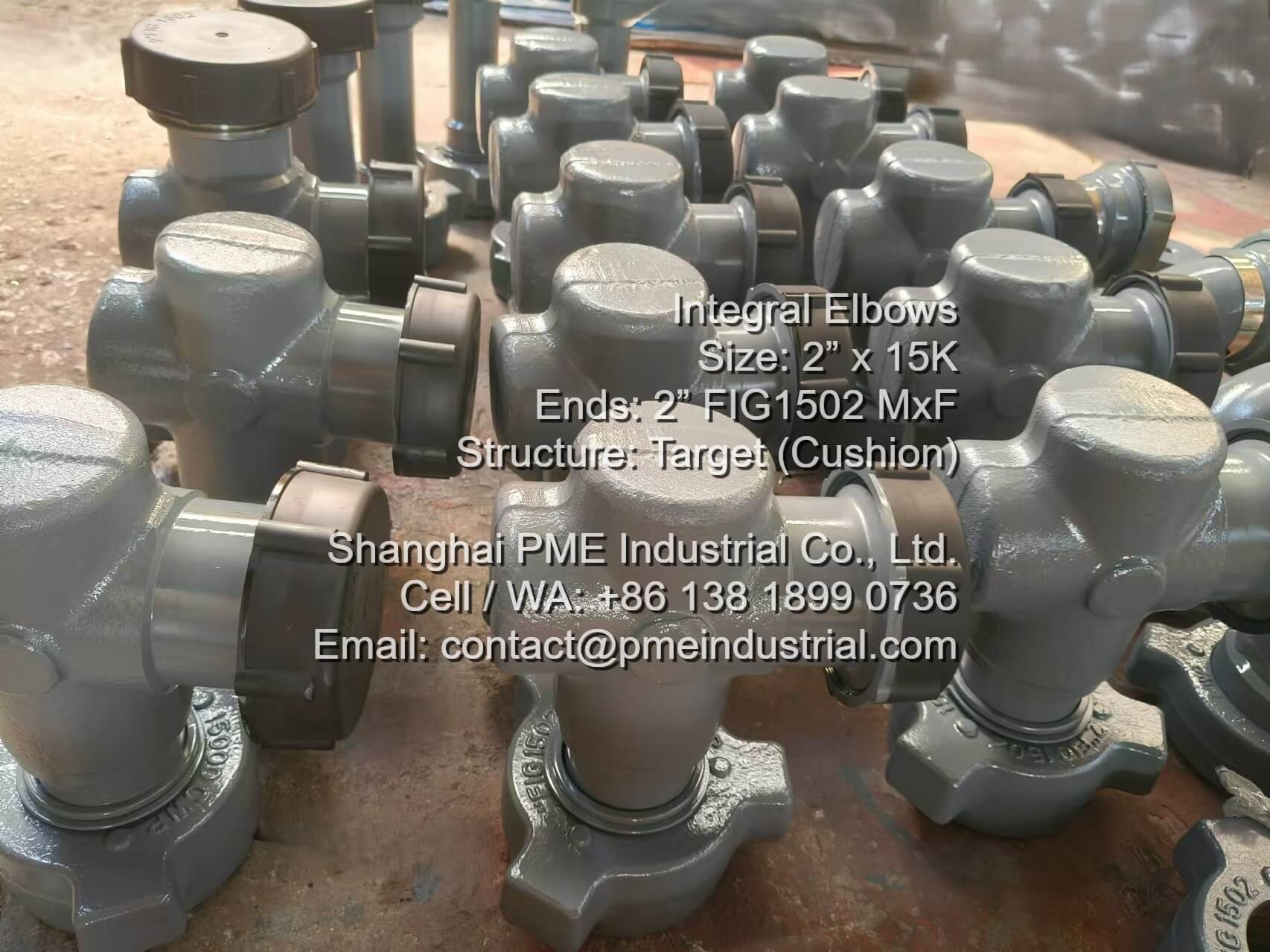
In high-velocity hydraulic fracturing, well testing, and severe flowback environments, directional piping changes are constantly subjected to extreme abrasive wear. When proppant sand slurry travels at high pressures, standard long sweep 90-degree elbows experience rapid wall-thinning along their outer radius, leading to unpredictable leaking hazards. To control these containment risks, fluid handling engineers are optimizing their treating iron layout with a heavy-duty 2 inch 1502 target elbow configuration.

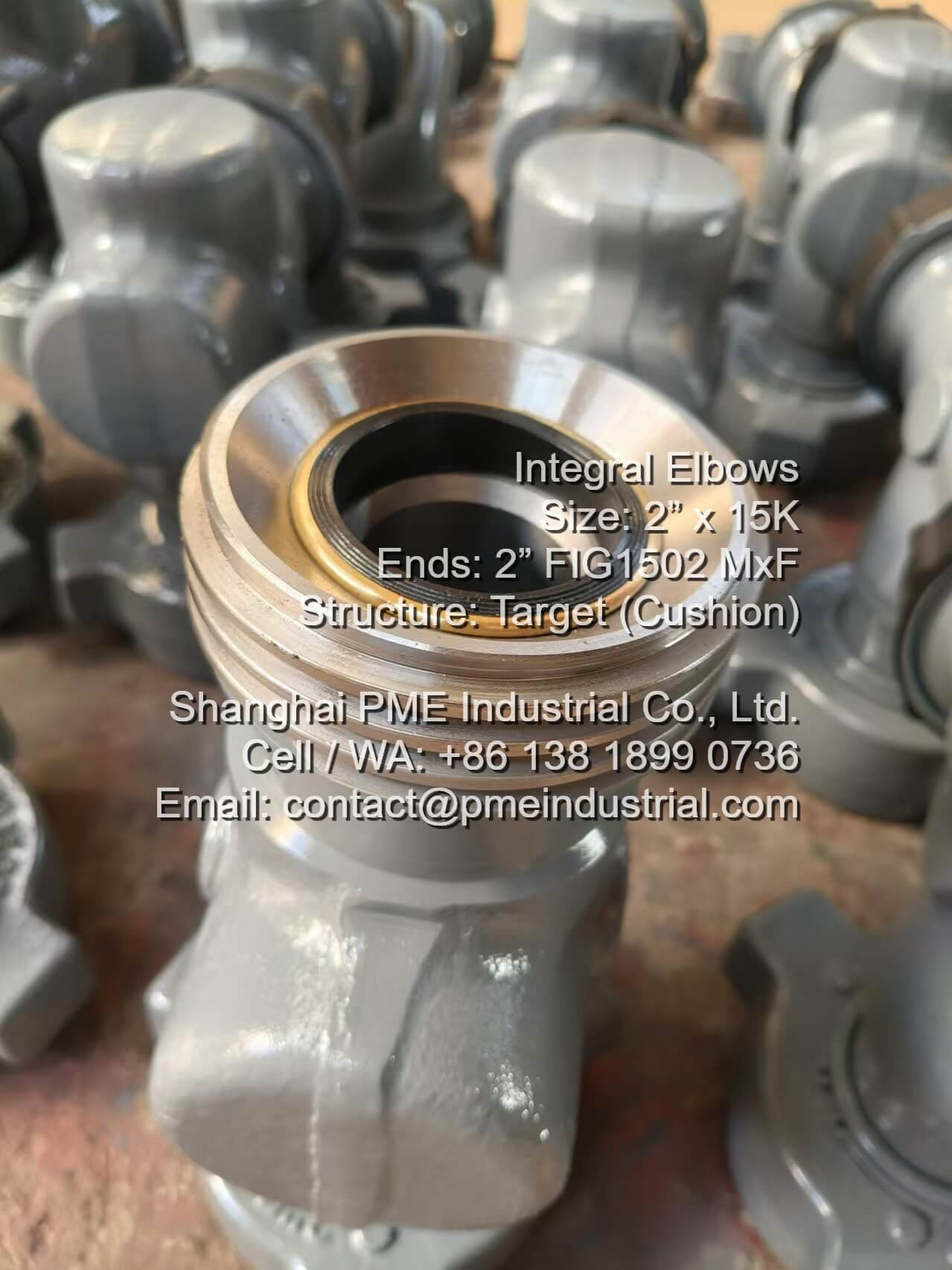
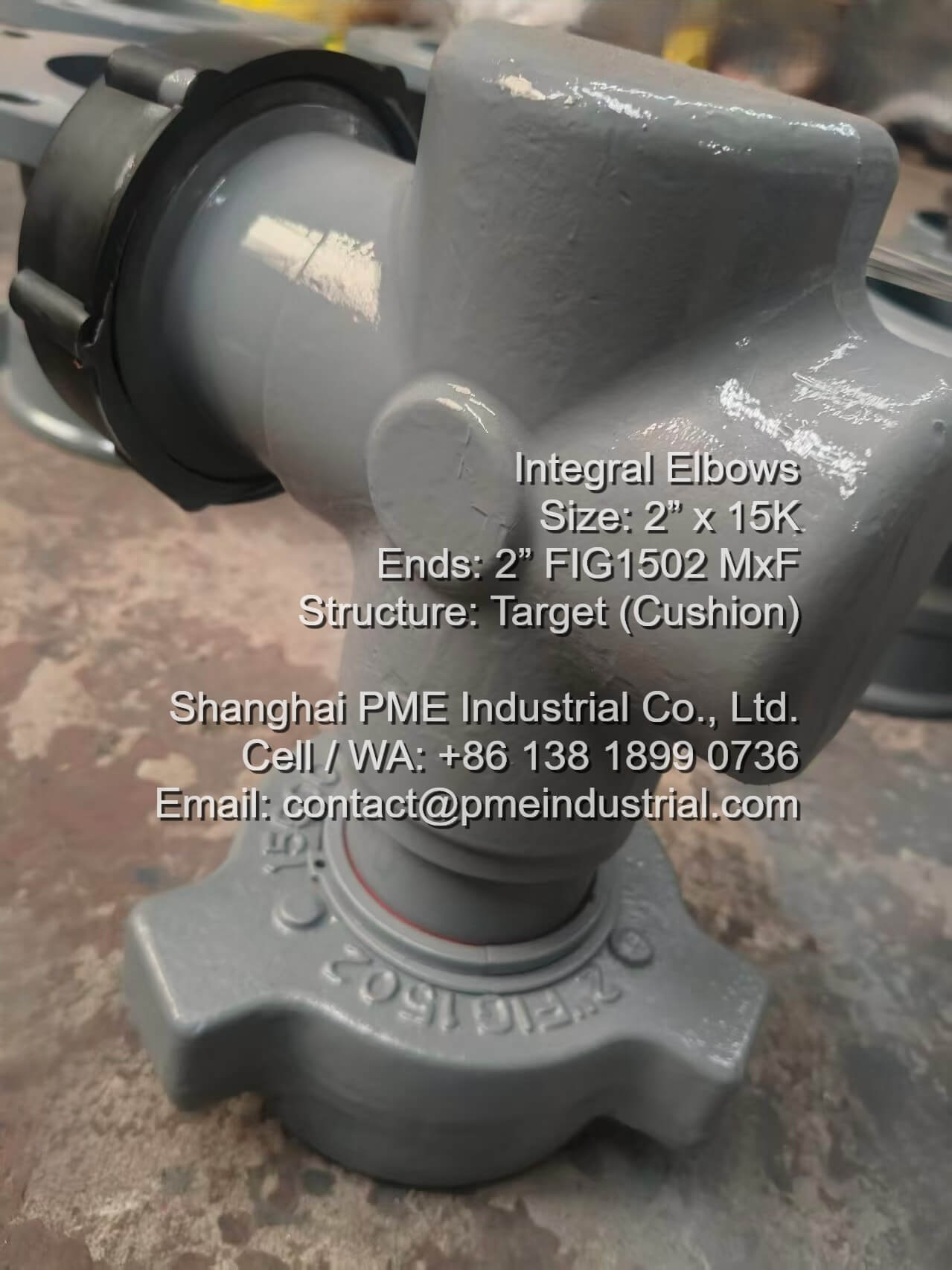
2 inch Fig 1502 integral target elbow rated at 15000 PSI CWP with wing by thread connections.

Figure 1: Authentic PME 2" Fig. 1502 Integral Target Elbow built for severe 15,000 PSI working environments.

The Fluid Buffer Mechanics: How Cushion Ells Work

The core structural advantage of a specialized 15000 psi cushion elbow lies in its extended blind-end pocket. Rather than permitting solid abrasives to strike the bare alloy boundary directly, the block geometry forms a natural dead-end trap. During operations, a small portion of the fracturing fluid pools within this space to create a localized stagnant buffer. Incoming abrasive media impacts this fluid target zone instead of the steel, transferring destructive energy safely away from the pressure-retaining wall surfaces.

Cross-section view of a 15000 PSI cushion elbow showing the blind block buffer chamber for erosion resistance.

Figure 2: Internal configuration illustrating the reinforced blind-chamber that generates the self-protecting fluid buffer.

Long Sweep 90° vs. Integral Target Elbows

While standard long sweep configurations offer low initial pressure drops, their thin-wall wear profiles during heavy sand fracturing jobs make them high-maintenance assets. Upgrading to a premium fig 1502 integral elbow reduces system downtime. By shifting the wear mechanism from mechanical abrasion to fluid-on-fluid friction, the overall lifecycle of treating iron manifolds is extended, reducing emergency site shut-downs and keeping standard flow loops secure.

Hydrostatic pressure testing of PME Industrial 2 inch 1502 target elbows at manufacturing plant.

Figure 3: Rigorous hydrostatic validation runs ensuring stable performance margins under severe flow line stresses.

Forging Integrity for Severe Service

To withstand continuous 15,000 PSI operating pressures, structural alloy material choices are vital. Shanghai PME Industrial manufactures heavy duty high pressure cushion ell variants from solid, clean forging billets. Each manifold block undergoes comprehensive heat treatment to maximize wall toughness, followed by wet magnetic particle inspections and extensive pressure test logs before final distribution.

Procurement Support: Looking to compare pressure drop variables, request standard sizing data, or source NACE MR0175 sour gas compliance elements? Connect with an accredited supplier by visiting the high-pressure product portal at Shanghai PME Industrial.

Heavy Duty TPU Layflat Fracking Hose: Specifications, Couplings, and Global Supply Matrix

In large-scale oil, gas, and mine dewatering operations, traditional rigid piping networks pose significant bottlenecks. The continuous shifting of pumps and rugged terrain conditions demand a flexible, rapidly deployable infrastructure. This is where the premium heavy-duty TPU Layflat Hose becomes an indispensable asset for global energy and industrial pumping sectors.

Manufactured via an integrated inner and outer coating of high-grade, abrasion-resistant Polyurethane, these totally lay-flat discharge hoses are engineered to withstand extreme environment challenges while optimizing operational efficiency.


Figure 1: Premium end couplings integrated with high-pressure TPU fracking layflat hose pipelines.

Key Engineering Specifications & Material Integrity

Unlike standard discharge lines, oilfield fracking operations require strict adherence to high-volume availability matrices. Modern manufacturing technologies have pushed the boundaries of standard dimensions and structural pressure tolerances:

  • Extensive Inside Diameters (ID): Available from versatile small diameters to high-volume transfer sizes, including 2″, 3″, 4″, 5″, 6″, 8″, 10″, 12″, 14″, 16″, and up to 20″.
  • Extreme Working Pressure (WP) Thresholds: Designed to handle intense high-pressure applications ranging from 100 psi, 150 psi, 200 psi, 250 psi, 300 psi, up to severe-duty ratings of 410 psi and 610 psi.
  • Robust Environmental Tolerance: Outstanding thermal flexibility remaining operational in all harsh weather conditions from extreme sub-zero to high temperatures (-55°C to +80°C / -67°F to +176°F).
Figure 2: Polyurethane layflat fracking hose spooled onto mechanical reelers for fast transport along haul roads.

Streamlined Pipeline Deployment & Interface Flexibility

One of the primary advantages highlighted by industrial field operators is the rapid deployment capability. When spooled directly from the packing onto specialized mechanical hose reelers, pumping systems can be fully deployed along haul roads or down pit walls within a matter of hours, rather than the days required for rigid layout alternatives.

Furthermore, to guarantee leak-free integration with pre-existing high-volume pumping irons, these high-pressure pipelines come equipped with premium, heavy-duty end connections. Operators can configure systems using standard Storz, Victaulic, or Camlock couplings, as well as customized interfaces engineered to meet exact engineering project blueprints.

For detailed structural data sheets or customized flowline pricing matrices, explore the engineering hub of PME Fracking Hose Solutions to coordinate technical quote requirements for your upcoming water transfer campaigns.

2026年6月7日星期日

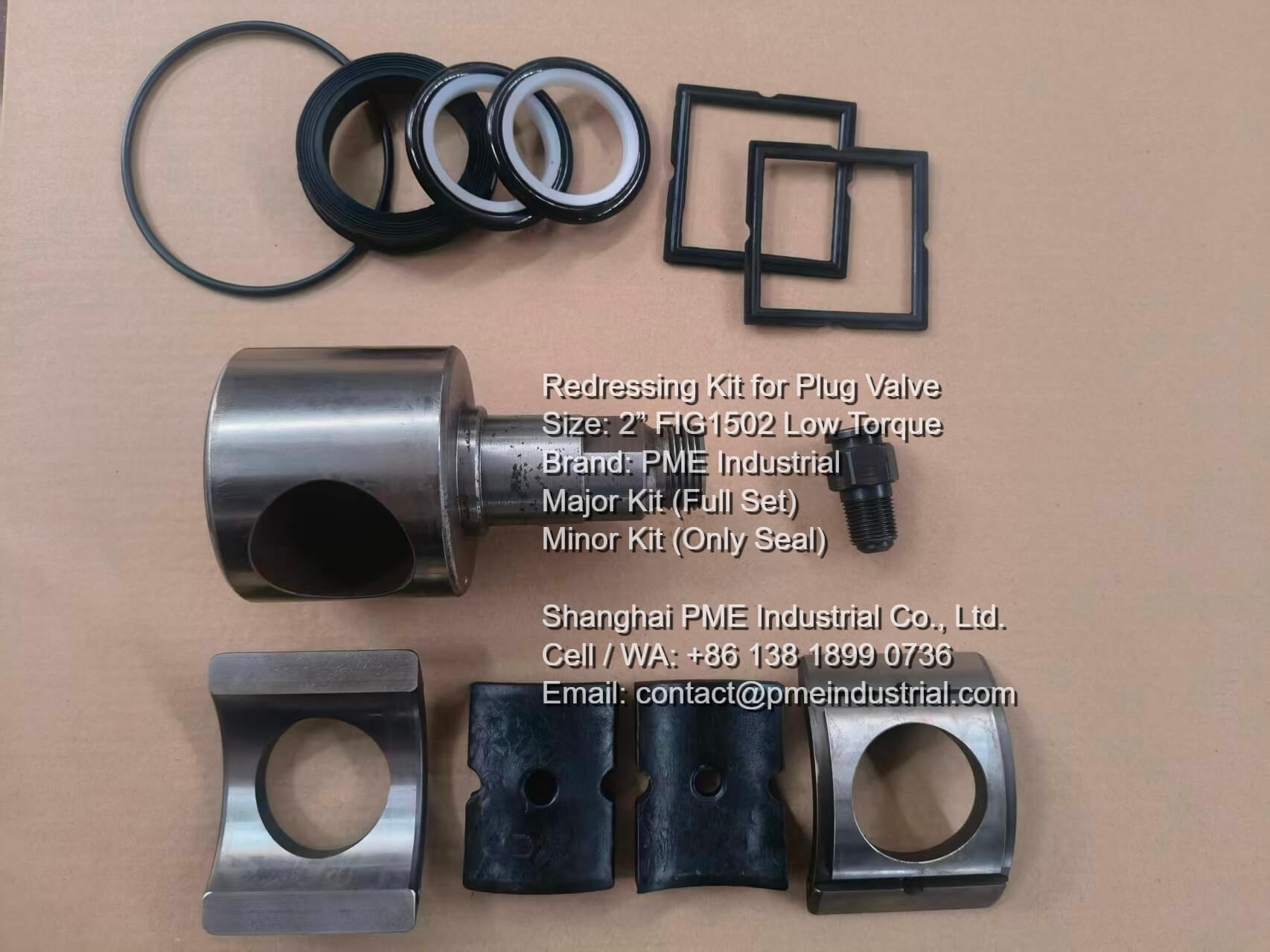
Redressing kit for 2 inch Fig 1502 low torque plug valve

Field Operations: Managing Maintenance Cycles for PME 15,000 PSI Plug Valves

In high-pressure flowback, cementing, and standard acidizing operations, maintaining the integrity of manifold valves is critical to preventing catastrophic line bypass. Among the various industrial iron elements deployed on high-pressure fluid lines, the proprietary 2-inch Figure 1502 low torque plug valve remains a core throttling component. To sustain continuous operational safety without full body replacements, deploying an authentic 2 inch plug valve repair kit specifically engineered for your proprietary PME valve assembly is mandatory standard practice.

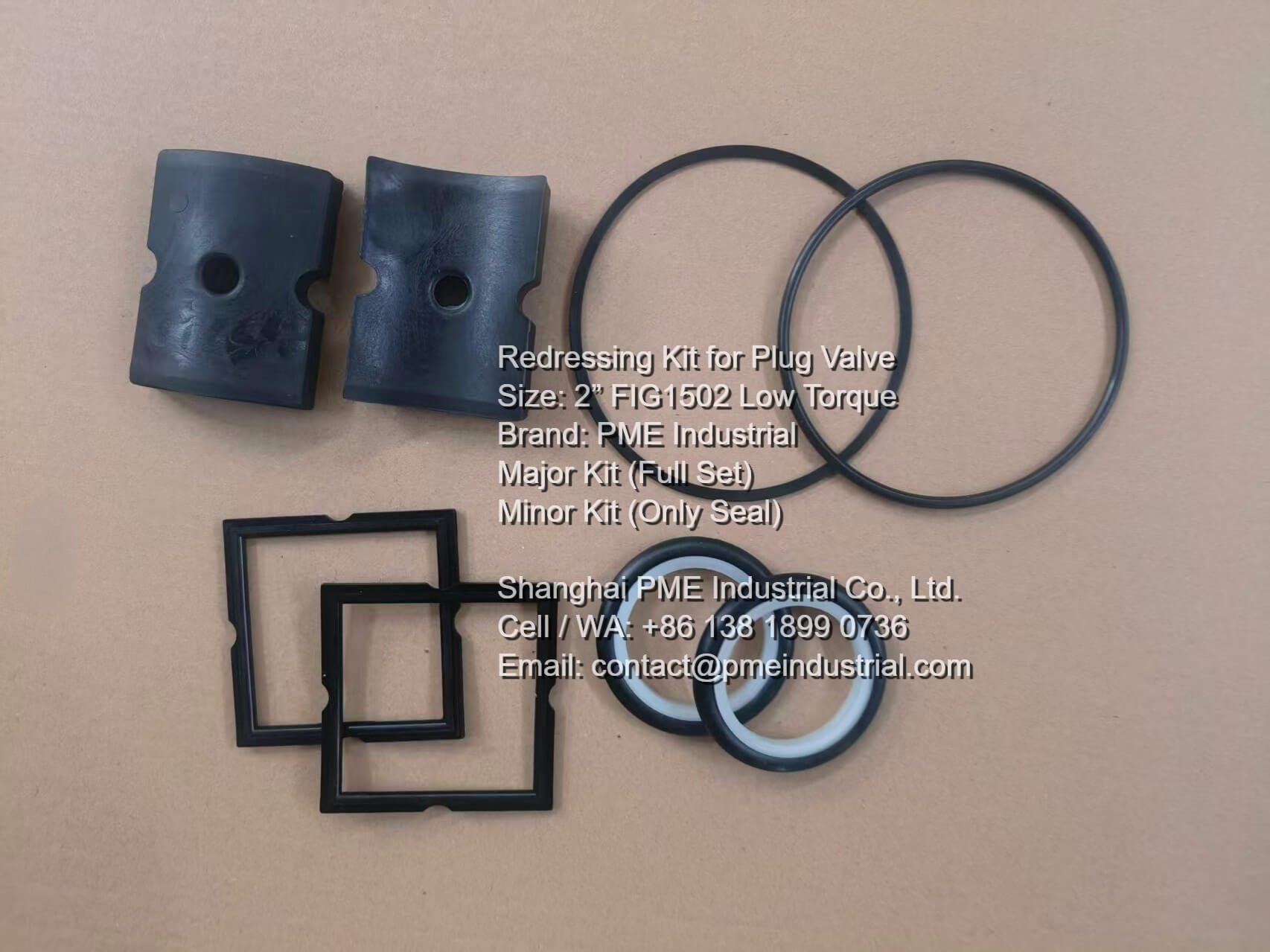
Major full set redressing kit for 2 inch Fig 1502 low torque plug valve including plug, inserts, and seals.

Figure 1: Original Major redressing kit configuration including the factory-matched dynamic central plug, segment inserts, and full sealing compound blocks.

When to Execute a Full Major Overhaul

The internal mechanical dynamics of a high-pressure plug valve rely heavily on the perfect structural surface mating between the central rotating plug cylinder and the dual side inserts. When continuous slurry erosion or harsh chemical flow washes out these metal boundaries, simple elastomeric seal replacements are insufficient. Executing a comprehensive Fig 1502 Plug Valve Redressing procedure with a Major Full Set allows field engineering crews to completely rebuild the dynamic core tolerances, avoiding unneeded body wear.

Minor seal redressing kit for 2 inch 15,000 PSI low torque plug valve.

Figure 2: Dedicated Minor seal redressing pack engineered exclusively for routine, preventative turnaround intervals.

Scheduled Preventative Maintenance Protocols

Conversely, for processing teams running routine, structured maintenance turns where the structural steel core remains fully intact, deploying standalone Low Torque Plug Valve Parts via a Minor Seal Kit is preferred. This package provides high-grade O-rings and backup seal elements to maintain operational pressure margins, managing budget parameters effectively during lighter service runs.

Procurement and Exclusive Brand Matching

When purchasing a high-grade Major Plug Valve Repair Kit or a focused Minor Seal Kit 15000 PSI configuration, please note that these internal sets are precisely engineered as dedicated, proprietary replacements. They are built exclusively to restore and secure the performance parameters of PME Industrial brand fluid control iron assets.

Sourcing Specialist Reference: For factory-direct material test schedules, technical drawing approvals, or custom elastomer compound inquiries, explore the technical flow components inventory at Shanghai PME Industrial.

2026年6月6日星期六

Custom ANSI 6 inch 150 lb raised face flange to 6 inch female camlock coupler crossover adapter

Engineering Notes: Transitioning Fixed ANSI Flanges to Mobile Camlock Hose Systems

In bulk liquid transport layout design, matching rigid storage tanks to dynamic transportation systems is a routine problem. While processing facility headers rely heavily on bolted structural pipeline connections, quick-connect hoses are the standard choice for field operators handling flexible connections. Bridging this specific operational gap requires a robust, heavy-duty 6 inch Female Camlock Flange crossover piece instead of makeshift multi-component connections.

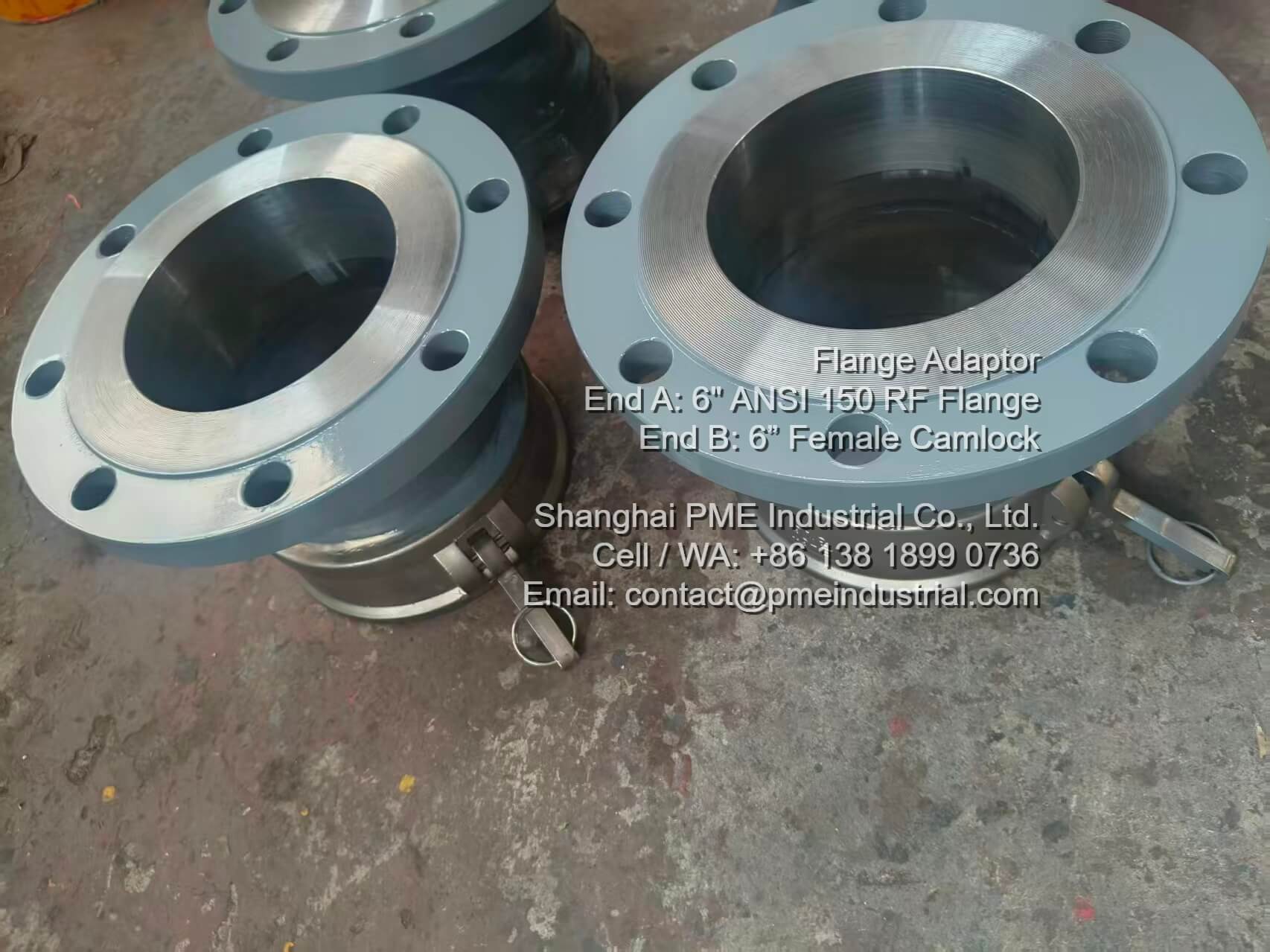
Ready-to-ship standard carbon steel 6 inch female camlock flange connections with heavy duty locking arms.

Figure 1: Completed custom heavy duty locking arm mechanisms on a machined Type FC camlock interface.

Why One-Piece Crossovers Defeat Multi-Piece Stacking

Many pipeline operators attempt to build an impromptu conversion by bolting a regular companion flange to a threaded standard camlock fitting. While this works under low-pressure laboratory environments, field vibration and bending stresses from thick rubber fluid lines will weaken those extra threads over time. Choosing a unified ANSI 150# RF Flange Crossover ensures structural integrity. A single monolithic part concentrates mechanical stress along the thick steel wall, lowering macro-deflection risks during rapid emergency valve shutoffs.

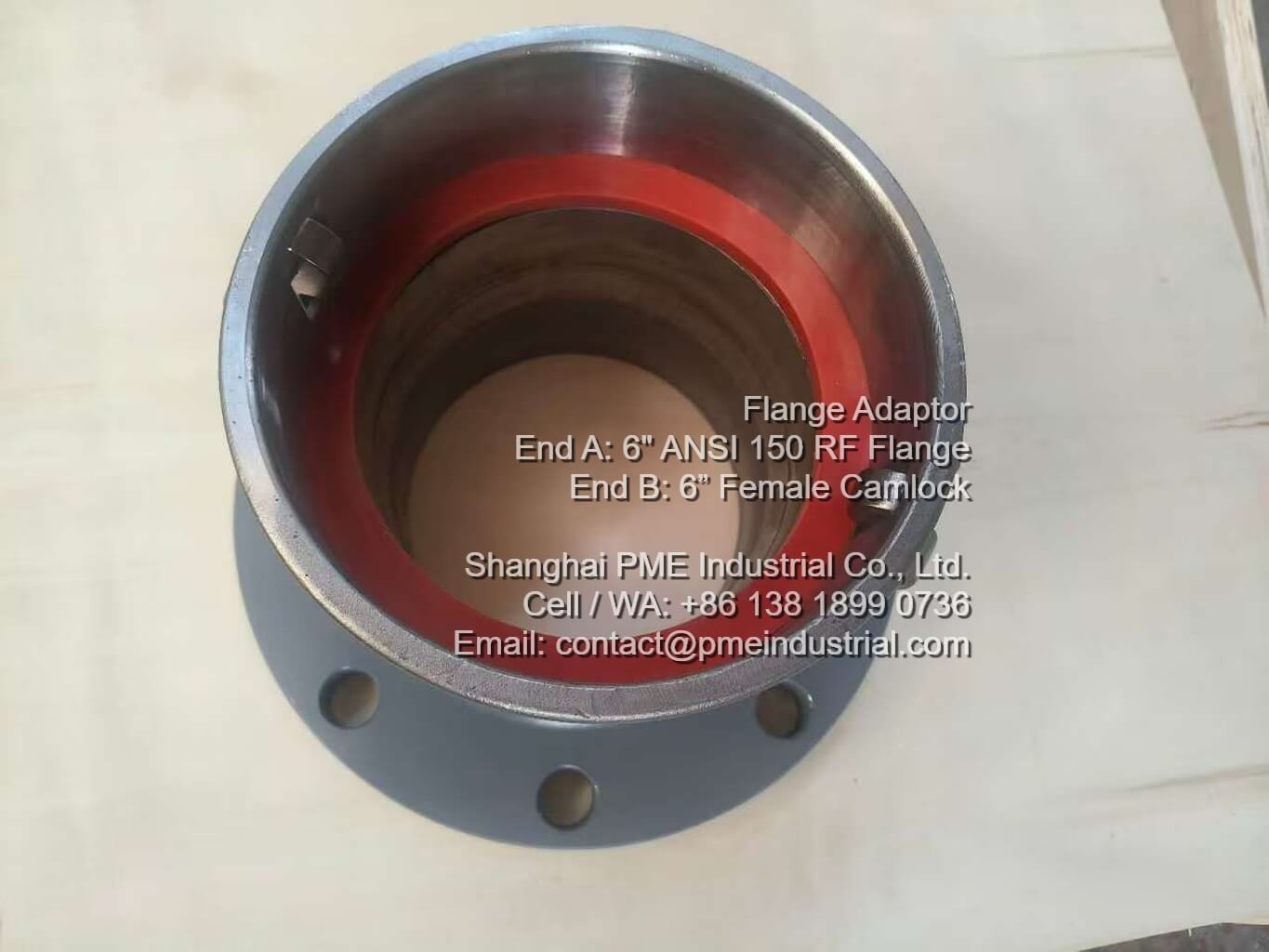
Custom ANSI 6 inch 150 lb raised face flange to 6 inch female camlock coupler crossover adapter.

Figure 2: Side view profile of a custom-machined 6" Class 150 flanged adapter terminating into a quick-connect cam and groove housing.

Selection Parameters for Non-Standard Hose Management

Selecting a non-standard Custom Cam and Groove Fitting requires analyzing fluid properties and working pressures. While the flange side follows traditional ASME ratings, the overall pressure capacity of the joint is limited by the camlock side's dynamic latch limits. It is best practice to install safety clip rings through the handle handles to avoid unexpected opening when pumping high-viscosity media.

Custom ANSI 6 inch 150# RF x 6 inch female camlock flanges manufactured by Shanghai PME Industrial.

Figure 3: Production delivery display of precision crossover couplings ready for final industrial deployment.

Optimizing System Configuration Options

When purchasing a non-standard 6 inch Flanged Camlock Coupler component from global manufacturers, confirm the continuous inner bore diameter. A true full-bore design prevents internal fluid cavitation and keeps head pressure loss minimal across terminal piping networks.

Sourcing Specialist Reference: For standard dimensions, manufacturing lead times, or specialized raw material certifications for custom pipelines, review the full catalog directly at Shanghai PME Industrial.