显示标签为“oilfield flowline fittings”的博文。显示所有博文

2026年9月6日星期日

3" FIG 100 Hammer Union | Welded SCH40 & Threaded 1000 PSI PME

In the oil and gas industry, as well as general industrial manufacturing, setting up efficient low-pressure fluid transfer lines requires hardware that balances durability with ease of installation. For lines operating under 1,000 PSI Cold Working Pressure (CWP), the Figure 100 series is the industry standard.

However, project managers frequently face a choice regarding end connections. In this guide, we break down the operational differences between welded and threaded configurations to help you make the right procurement decision.

1. The Case for Permanent Integrity: Welded SCH40

When constructing fixed production manifolds or permanent plant utility lines, vibration and long-term mechanical stress are major concerns. Threaded joints, while convenient, can sometimes loosen under constant heavy vibration.
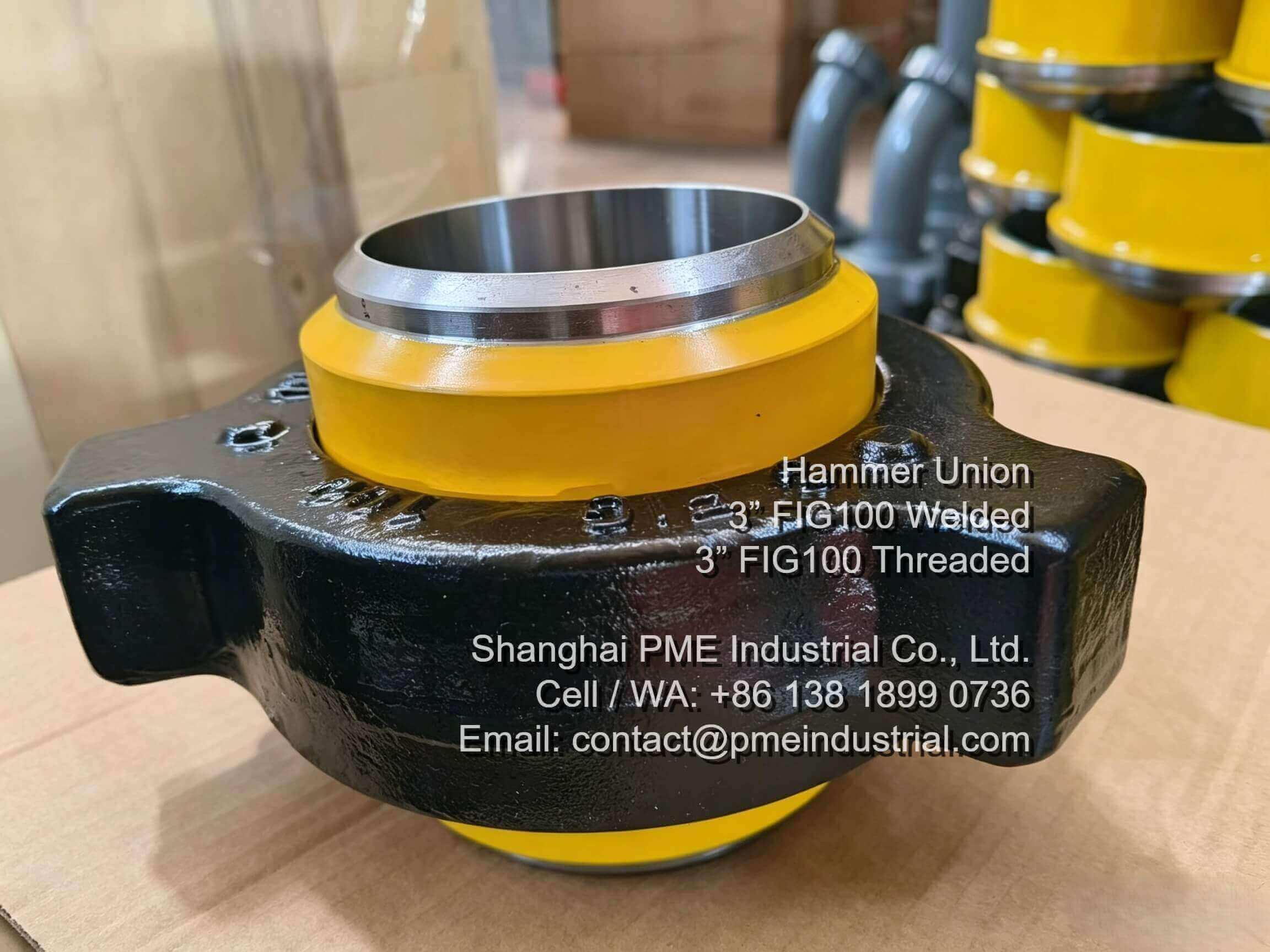
Welded SCH40 configuration for permanent utility lines

Butt-welding directly onto Schedule 40 piping systems ensures a leak-proof structural tie-in.

By opting for a welded SCH40 connection, engineers ensure a continuous, leak-proof structural tie-in. This is highly recommended for environments where the piping network will remain stationary for years.

2. The Case for Flexibility: Threaded Connections

Conversely, many operations—such as temporary water transfer lines, mobile mud systems, or modular surface equipment—require rapid deployment and frequent relocation. In these scenarios, deploying welding equipment and hot-work permits in the field is inefficient.
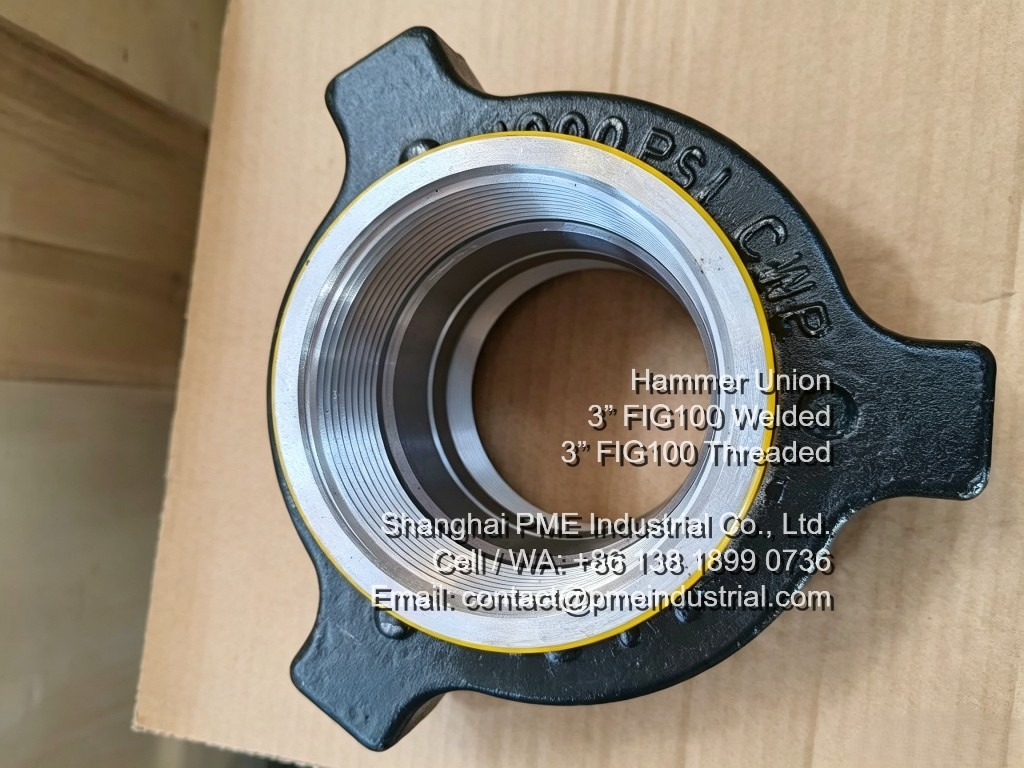
Threaded connection for temporary fluid transfer

Precision pipe threads allow for mechanical connection without on-site welding.

Threaded connections utilize standard pipeline threads, allowing field crews to screw the fittings directly onto existing pipes. This significantly reduces downtime during assembly and disassembly.

Sourcing High-Quality API/Weco Interchangeable Units

Regardless of the connection type chosen, the quality of the forging, machining, and protective coating dictates the lifespan of the fitting in harsh environments.
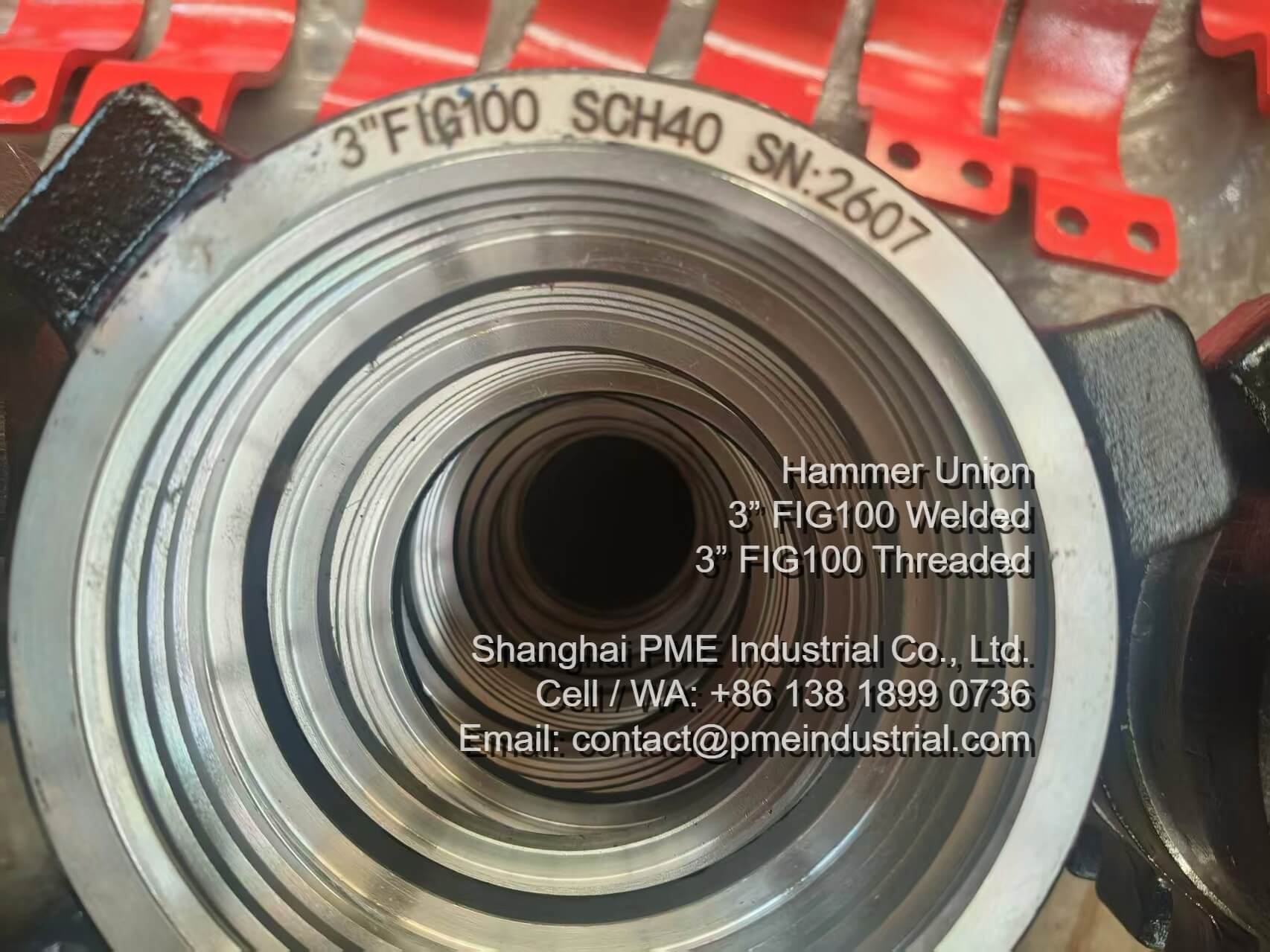
Clear cast pressure ratings on export-ready industrial hardware

For European drilling contractors and global industrial facilities looking for reliable hardware, Shanghai PME Industrial manufactures top-tier solutions. Their current batch of the 3 inch hammer union FIG 100 is fully inspected, features clear cast pressure ratings, and is packed securely for international transit. Both welded SCH40 and threaded variants are available, fully interchangeable with standard Weco components.

Conclusion: Assess your project's lifespan and vibration levels. Choose welded for permanence and threaded for modularity. Ensure you partner with a manufacturer that guarantees 1,000 PSI CWP ratings and strict dimensional inspections.

2026年6月9日星期二

Erosion Control: Minimizing Washout Failures with 15,000 PSI Target Elbows

Mitigating Flowline Erosion: Why Field Crews Are Upgrading to Cushion Elbows

In high-velocity hydraulic fracturing, well testing, and severe flowback environments, directional piping changes are constantly subjected to extreme abrasive wear. When proppant sand slurry travels at high pressures, standard long sweep 90-degree elbows experience rapid wall-thinning along their outer radius, leading to unpredictable leaking hazards. To control these containment risks, fluid handling engineers are optimizing their treating iron layout with a heavy-duty 2 inch 1502 target elbow configuration.

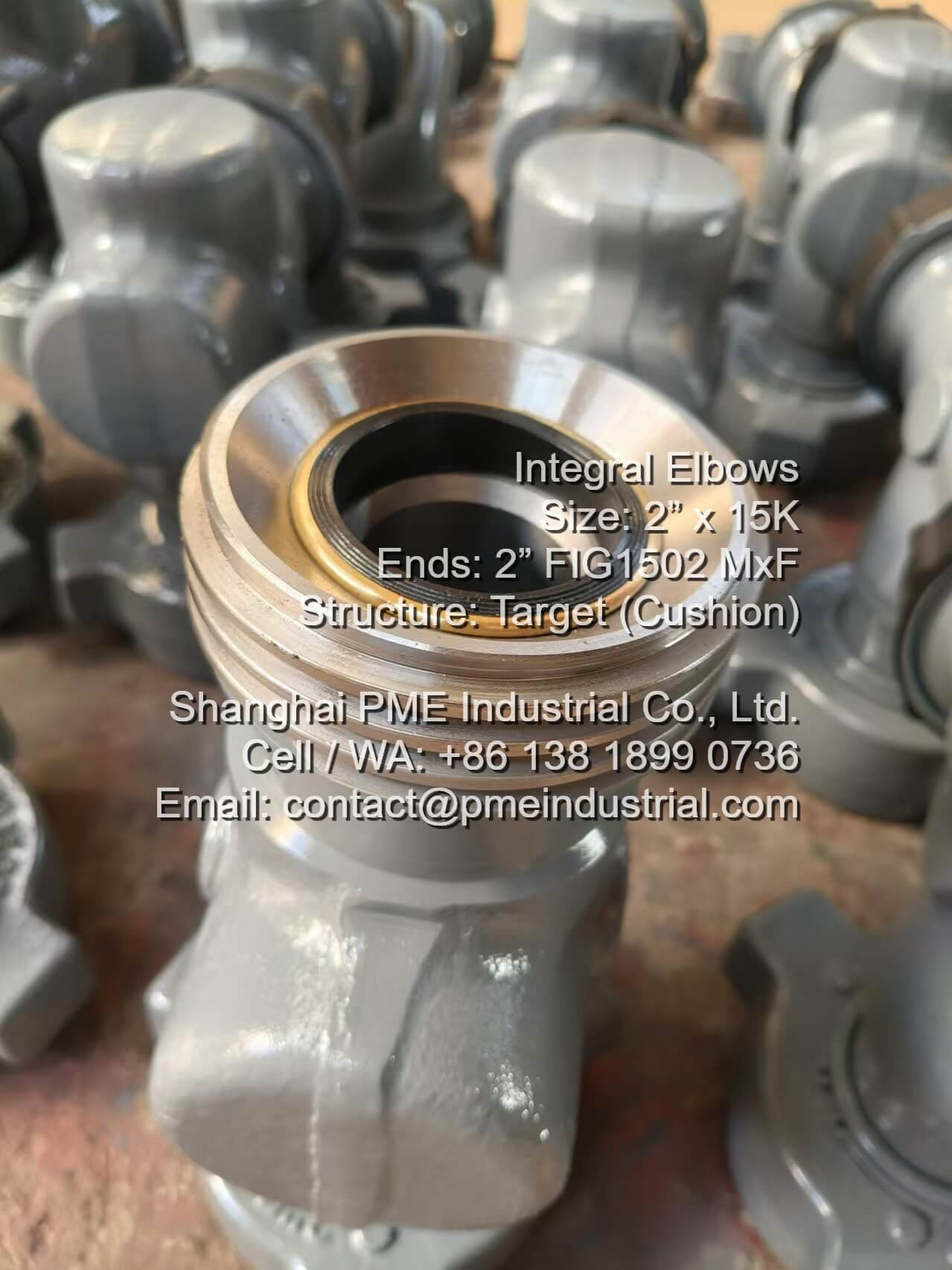
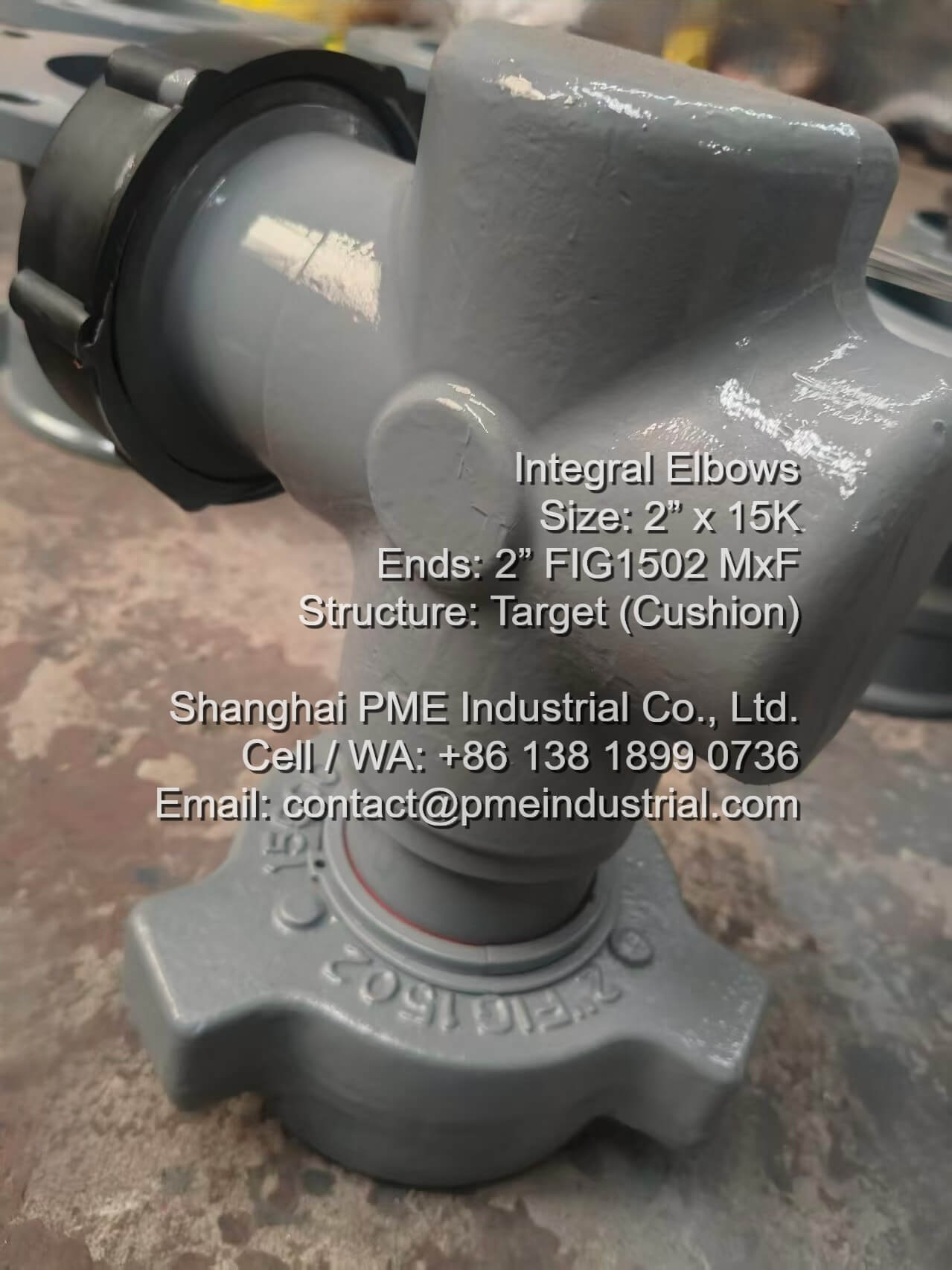
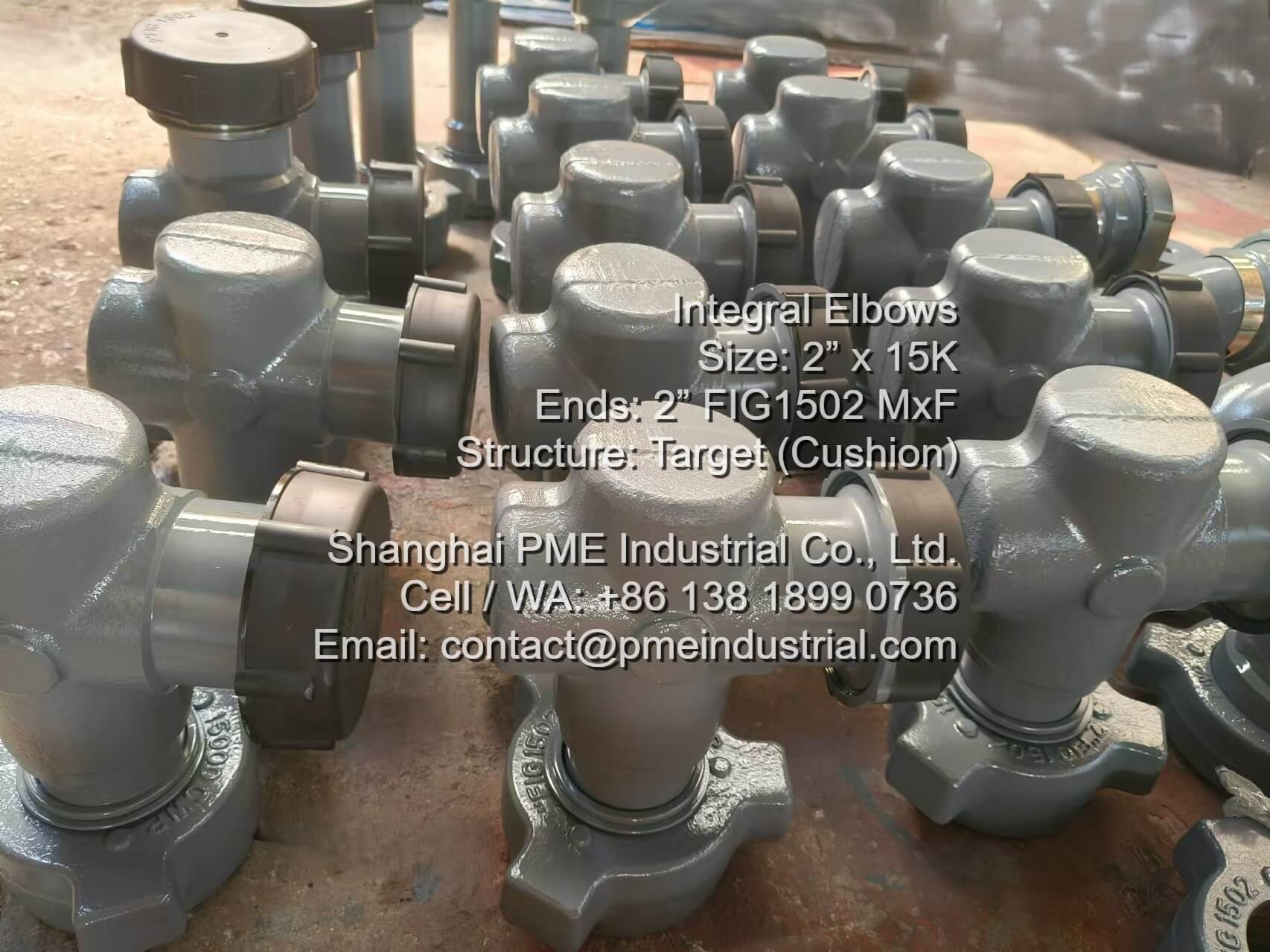
2 inch Fig 1502 integral target elbow rated at 15000 PSI CWP with wing by thread connections.

Figure 1: Authentic PME 2" Fig. 1502 Integral Target Elbow built for severe 15,000 PSI working environments.

The Fluid Buffer Mechanics: How Cushion Ells Work

The core structural advantage of a specialized 15000 psi cushion elbow lies in its extended blind-end pocket. Rather than permitting solid abrasives to strike the bare alloy boundary directly, the block geometry forms a natural dead-end trap. During operations, a small portion of the fracturing fluid pools within this space to create a localized stagnant buffer. Incoming abrasive media impacts this fluid target zone instead of the steel, transferring destructive energy safely away from the pressure-retaining wall surfaces.

Cross-section view of a 15000 PSI cushion elbow showing the blind block buffer chamber for erosion resistance.

Figure 2: Internal configuration illustrating the reinforced blind-chamber that generates the self-protecting fluid buffer.

Long Sweep 90° vs. Integral Target Elbows

While standard long sweep configurations offer low initial pressure drops, their thin-wall wear profiles during heavy sand fracturing jobs make them high-maintenance assets. Upgrading to a premium fig 1502 integral elbow reduces system downtime. By shifting the wear mechanism from mechanical abrasion to fluid-on-fluid friction, the overall lifecycle of treating iron manifolds is extended, reducing emergency site shut-downs and keeping standard flow loops secure.

Hydrostatic pressure testing of PME Industrial 2 inch 1502 target elbows at manufacturing plant.

Figure 3: Rigorous hydrostatic validation runs ensuring stable performance margins under severe flow line stresses.

Forging Integrity for Severe Service

To withstand continuous 15,000 PSI operating pressures, structural alloy material choices are vital. Shanghai PME Industrial manufactures heavy duty high pressure cushion ell variants from solid, clean forging billets. Each manifold block undergoes comprehensive heat treatment to maximize wall toughness, followed by wet magnetic particle inspections and extensive pressure test logs before final distribution.

Procurement Support: Looking to compare pressure drop variables, request standard sizing data, or source NACE MR0175 sour gas compliance elements? Connect with an accredited supplier by visiting the high-pressure product portal at Shanghai PME Industrial.