
In high-pressure oilfield drilling operations, the structural reliability of blowout preventer (BOP) control lines dictates site safety margins. When unexpected pressure spikes or operational dynamics create harsh surface environments, control system components must maintain structural integrity. Deploying a certified bop hose fire resistant layout ensures that localized thermal hazards do not disrupt critical control valve actuation.
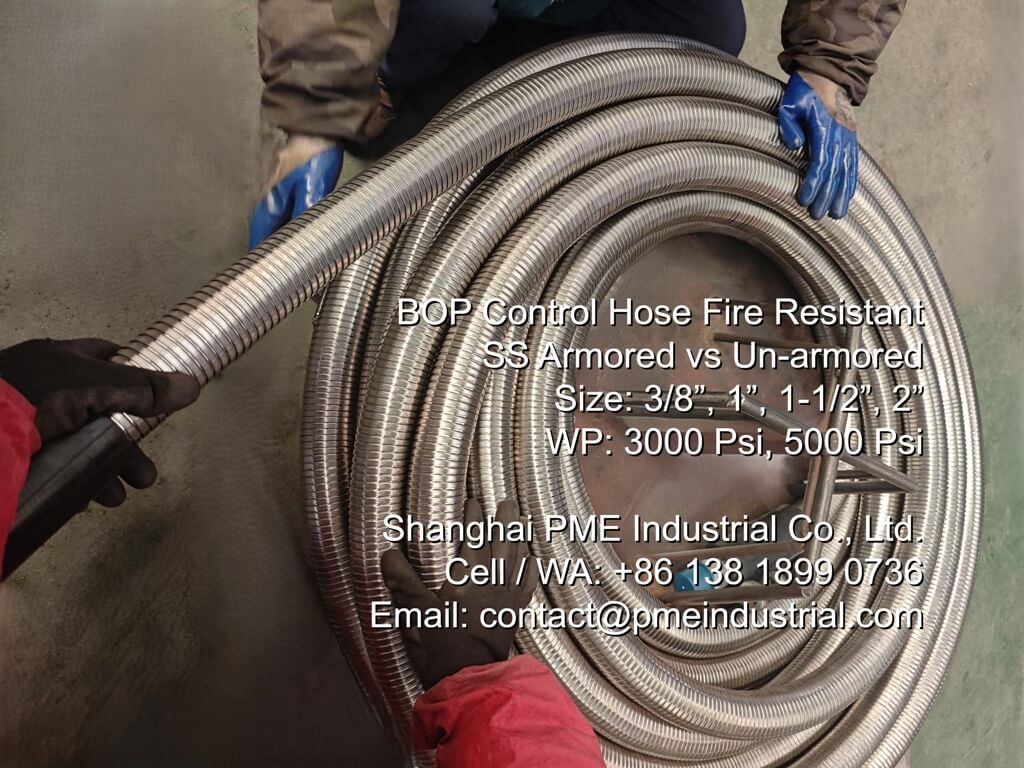
Figure 1: Stainless steel armored fire resistant BOP hose (1 inch, 5,000 PSI WP) coiled and structured for heavy-duty master lines.
Mechanical Comparison: Evaluating External Casing Strategies
Field specification teams generally segment blowout preventer hoses into two architectural configurations based on external environments: interlocked stainless steel armored sleeves and un-armored rubberized flame-retardant covers. Selecting the correct layout involves balancing mechanical impact risks against specific routing clearances.
An ss armored bop hose provides an interlocking metallic layer that shields the inner elastomer core from dropped object damage, crushing forces, and severe friction common on the rig floor. However, this mechanical protection increases weight and forces a larger minimum bend radius. Conversely, an un-armored fire flex hose utilizes proprietary compound engineering to survive thermal contact without the added metallic bulk, maximizing flexibility in confined spatial setups.
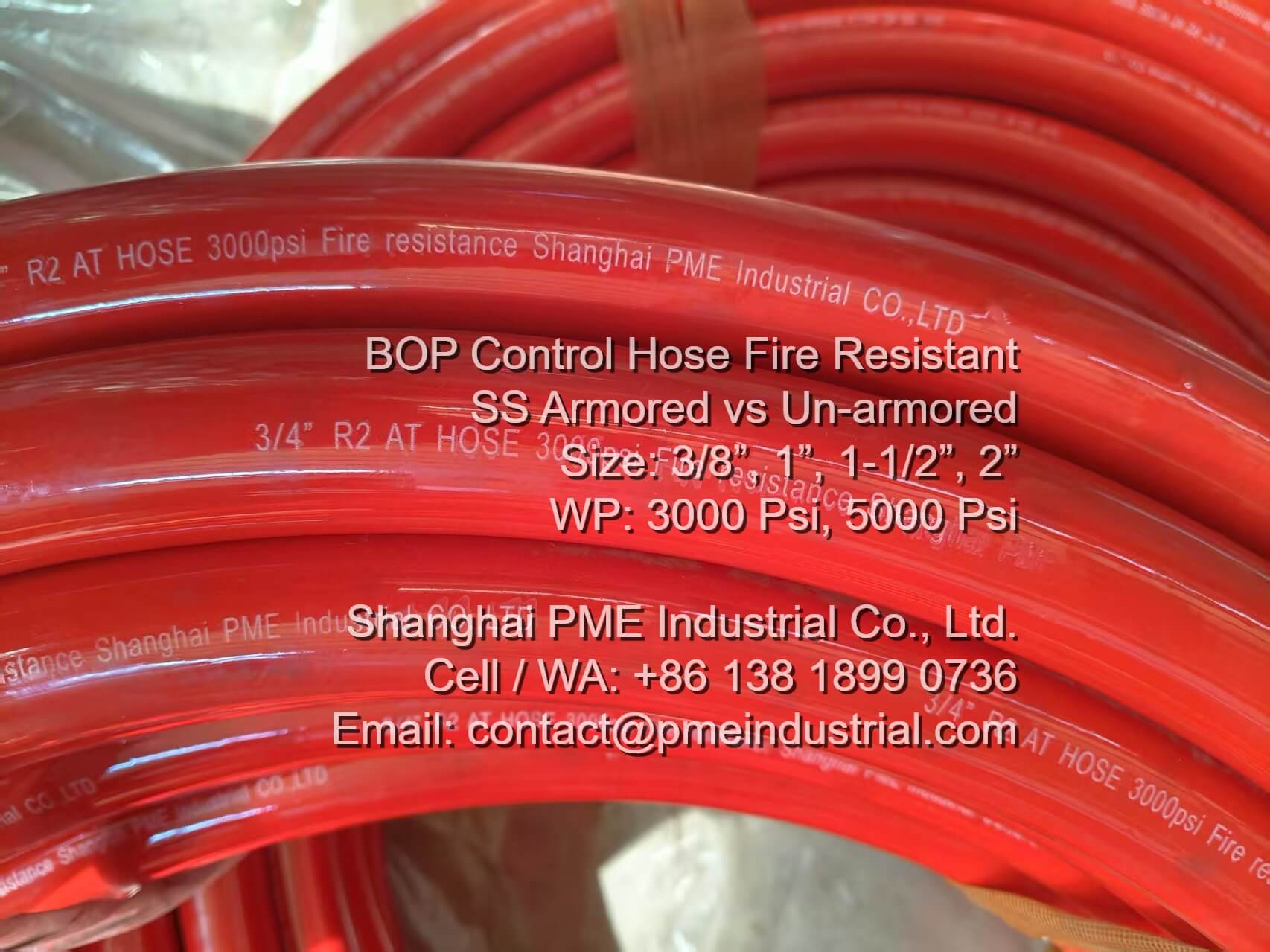
Figure 2: Flexible 3/4 inch R2 AT un-armored fire resistant BOP hose featuring a high-visibility red rubber cover rated for 3,000 PSI.
Global Industry Benchmarks and Alternatives
For sourcing professionals review ing control manifolds, identifying independent alternative manufacturing channels is essential for managing supply chain logistics. In the international marketplace, standard 3,000 PSI and 5,000 PSI fire-resistant options serve as standalone technical alternatives to legacy series, such as the Parker FA35 line or the NRP Jones A822 Fire Flex series.
Engineering teams evaluating new project installations or routine system overhaul turnarounds can access comprehensive pressure test ratings, material tracking records, and configuration logs via the official manufacturer portal at pmeindustrial.com.
