
In high-pressure well stimulation, hydraulic fracturing, and well testing operations, temporary flowlines are constantly subjected to severe cyclic stress, pressure spikes up to 15,000 PSI CWP, and fluid-induced wall thinning. While high-pressure manifolds rely heavily on heavy-duty piping, structural integrity often fails at directional changes and junction points where flow velocity increases dramatically.
To solve fluid turbulence and sand slurry erosion in active drilling sites, engineers specify heavy-duty FIG 1502 Integral Fittings 15000 PSI manufactured directly from seamless forged alloy steel blocks. Below is an engineering breakdown of how differing internal geometries—such as 45° Wyes, Standard 90° Tees, and Cushion Target Tees—perform under harsh field conditions.
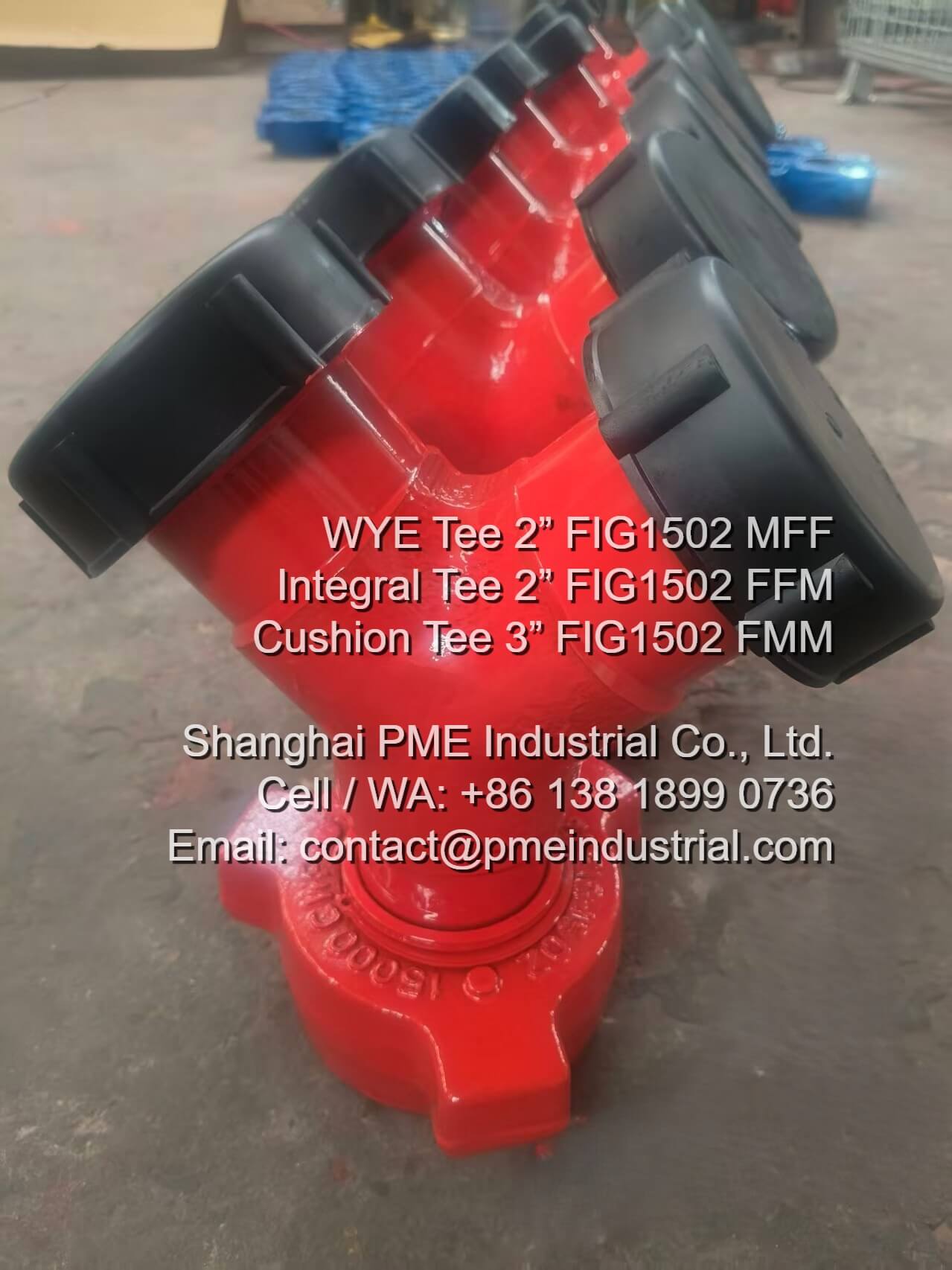
2" Wye MxFxF FIG 1502 (15K CWP)
Designed with a 45° angle to reduce internal fluid drag and shear friction in high-rate fluid splitting applications.
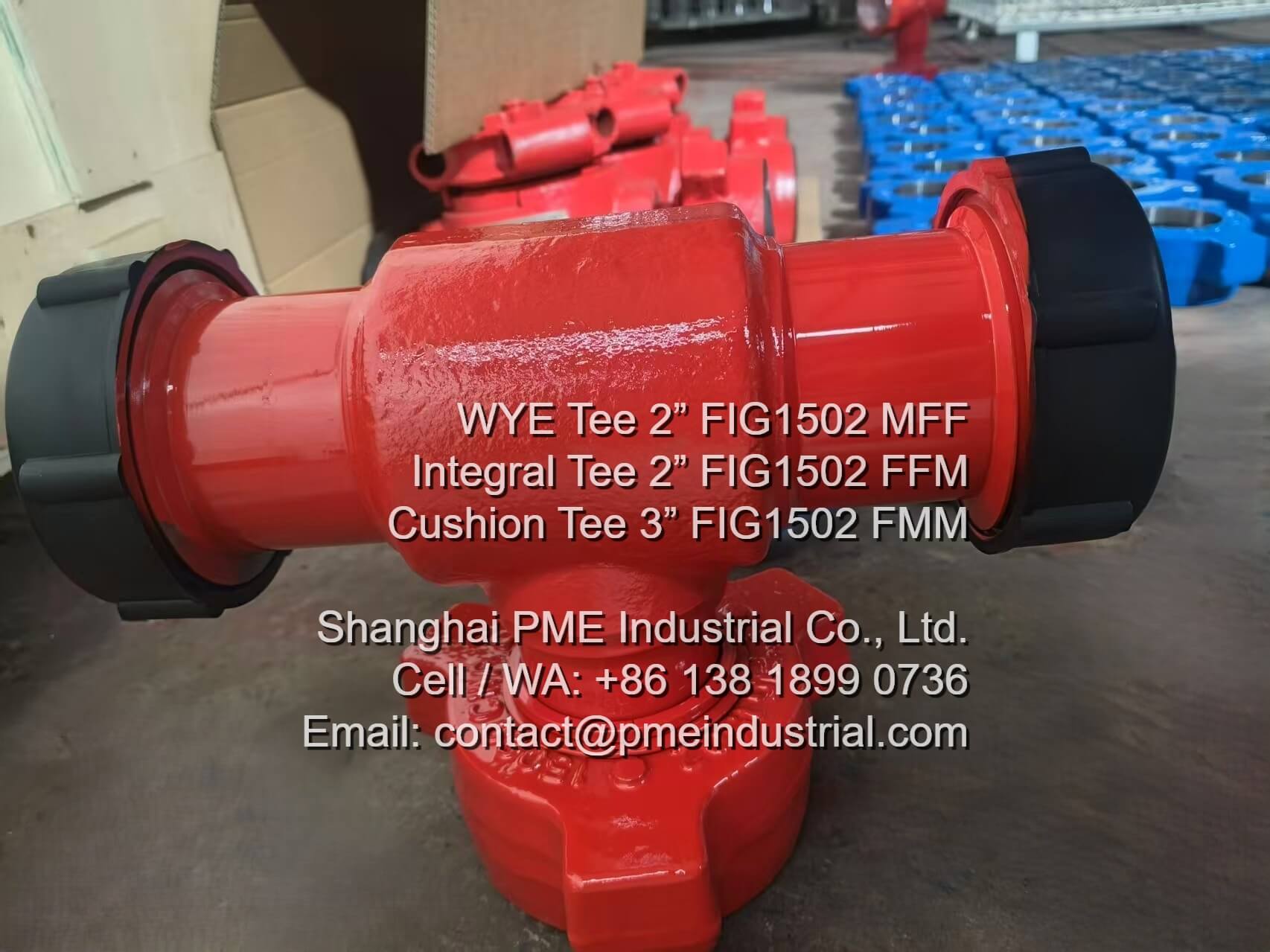
2" Standard Tee FxFxM FIG 1502 (15K CWP)
A robust 90° orthogonal block for compact manifold branching, sensor port installation, and auxiliary return lines.
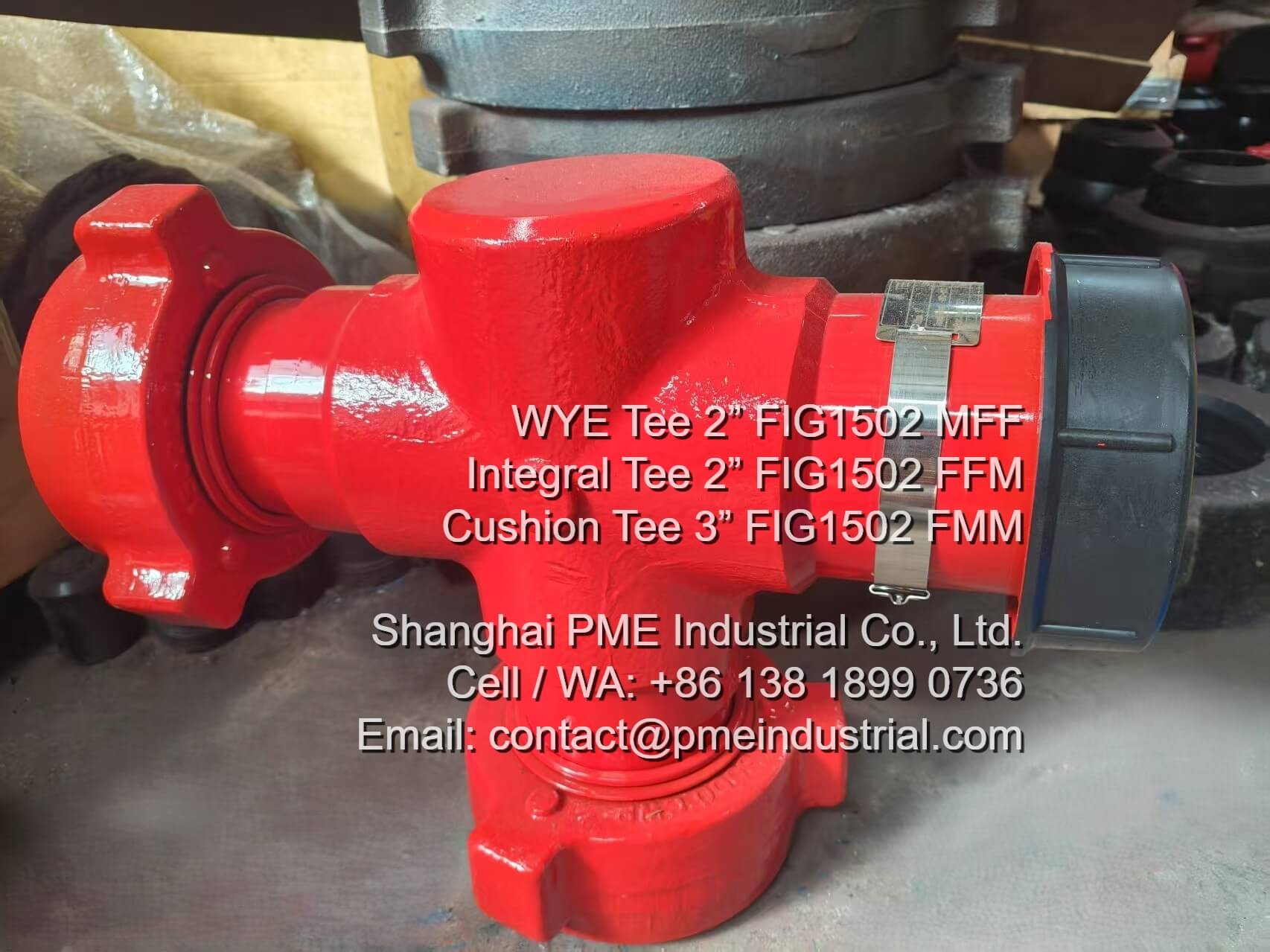
3" Cushion Tee FxMxM FIG 1502 (15K CWP)
Engineered with a dead-end fluid pocket that acts as a hydraulic cushion against abrasive proppant impacts.
Key Internal Flow Dynamics & Erosion Control Mechanisms
Selecting between standard tees, wyes, and cushion target tees depends heavily on fluid composition, slurry velocity, and line configuration:
- 45-Degree Flow Splitting (Wye Design): Traditional 90-degree elbows and tees create sudden direction changes, leading to high turbulence, pressure drop, and localized impingement erosion. The 45° branch angle of the 2" Wye MxFxF enables gradual fluid acceleration, minimizing cavitation when combining or dividing flow lines.
- Hydraulic Cushion Protection (Target Tee Design): In high-volume hydraulic fracturing, proppant slurry acts like liquid sandblasting. The 3" Cushion Tee features an extended blind pocket directly opposite the inlet port. Fluid gets trapped inside this dead-end zone, forcing incoming high-velocity proppant to collide against a static liquid barrier rather than bare forged steel.
- Monolithic Alloy Forging vs. Fabricated Welds: At 15,000 PSI operating pressures (22,500 PSI hydrostatic test pressure), welded pipe fittings pose severe risks of stress cracking. High-spec high pressure hammer union flowline fittings are integrally forged from high-strength alloy steel to maintain structural uniform grain flow compliant with API Spec 16C and NACE MR0175 standards.
Technical Matrix Overview
| Fitting Type | End Connection | Pressure Rating (CWP) | Primary Application |
|---|---|---|---|
| 2" Wye Fitting | FIG 1502 MxFxF | 15,000 PSI | Low-turbulence fluid blending/splitting |
| 2" Standard Tee | FIG 1502 FxFxM | 15,000 PSI | Orthogonal distribution & sensor ports |
| 3" Cushion Tee | FIG 1502 FxMxM | 15,000 PSI | Erosion buffer in sand-laden frac lines |
Looking for API 16C Certified Flowline Components?
Selecting precise hammer union end configurations and wall thickness profiles ensures long-term operational safety across deep drilling and frac spreads. To review detailed engineering dimensional drawings, hydrostatic test certificates, and full product specifications, visit the official product page:
👉 Explore Full Specifications: Shanghai PME FIG 1502 Integral Fittings (15000 PSI) Manufacturing
